
A brown water stain spreading across a ceiling is more than a cosmetic problem. The drywall behind it can soften, sag, hold moisture, and eventually grow mold. So, does insurance cover drywall damage? Often, yes – but coverage usually depends on what caused the damage, how quickly the issue was addressed, and the specific language in your policy.
For homeowners in Monroe, Downriver, and Southeast Michigan, the clearest answer is this: insurance may pay to repair drywall when it was damaged by a sudden, accidental covered event. It generally will not pay for damage tied to long-term leaks, poor maintenance, flooding, or wear and tear. Knowing the difference before you file a claim can save time and prevent surprises.
Does Insurance Cover Drywall Damage From Water?
Homeowners insurance commonly covers drywall damage caused by a sudden and accidental water event. A burst supply line, failed appliance hose, overflowing upstairs bathroom, or a pipe that freezes and breaks can all lead to covered interior repairs. If water damages walls or ceilings during a covered loss, the policy may help pay for drying, drywall removal, replacement, finishing, texture matching, and repainting, subject to your deductible and coverage limits.
The key word is sudden. If a washing machine hose bursts overnight and water runs through the ceiling below, that is very different from a slow leak under a sink that has been soaking the wall cavity for months. Insurers often view gradual leaks as maintenance issues rather than unexpected losses.
Roof leaks can fall into either category. If wind or a falling branch damages the roof during a storm and rain enters immediately, resulting drywall damage may be covered. If an aging roof has been leaking through worn shingles for years, the insurer may deny the claim or cover only a limited part of the interior damage. The cause matters as much as the stained or damaged drywall itself.
What Types of Drywall Damage Are Usually Covered?
A standard homeowners policy may provide coverage when drywall is damaged by a named or covered peril. Exact terms vary by carrier and policy, but common examples include:
- Water from a sudden plumbing failure, appliance leak, or accidental overflow
- Fire, smoke, or firefighting water damage
- Wind, hail, or storm damage that creates an opening and allows water inside
- Damage from a falling tree or branch
- Vandalism or accidental impact caused by a covered event
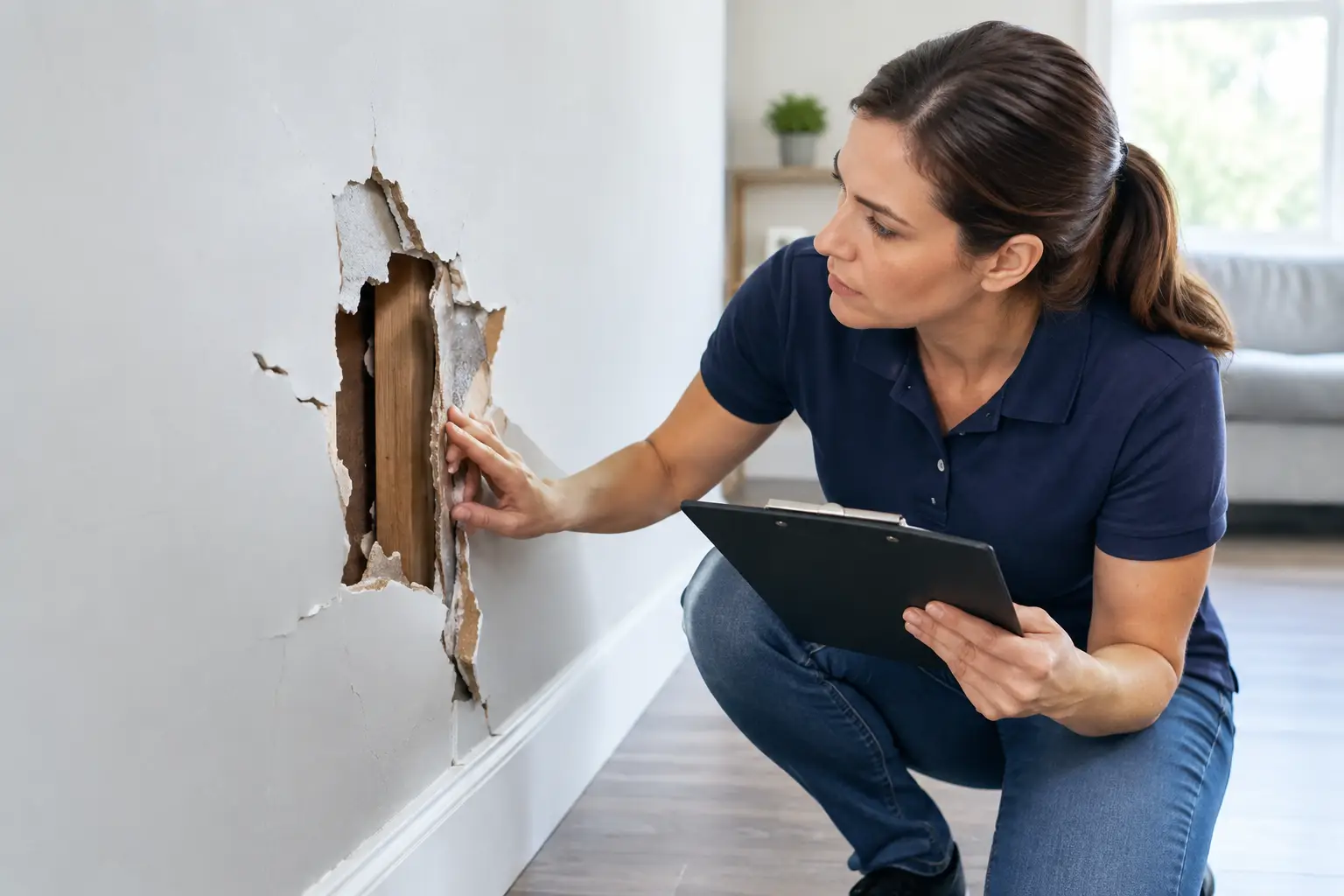
Drywall repair is typically part of the restoration work after the source of damage is controlled. That may mean cutting out wet ceiling sections, removing compromised insulation, replacing wallboard, taping joints, applying finish coats, and matching the existing texture. A small visible stain can sometimes hide a much larger area of damaged material behind the surface.
If you have matching coverage or replacement cost coverage, your policy may also help address the challenge of restoring a continuous finish. Still, insurance adjusters and policies differ. Ask whether the estimate includes texture blending and painting needed to return the affected area to a reasonably uniform appearance.
When Drywall Damage Is Often Excluded
The most common claim disputes involve damage that developed slowly. Insurance is designed for unexpected losses, not routine upkeep. A policy may exclude or limit claims involving repeated seepage, neglect, faulty construction, rot, or deterioration.
For example, a shower surround with failed caulk can allow small amounts of water into surrounding drywall over time. By the time paint bubbles or the wall feels soft, the problem may have been present for a while. The drywall replacement may not be covered, even though repairing it is still necessary to prevent further damage.
Flooding is another important distinction. Water that enters from rising groundwater, overflowing rivers, or widespread surface water is generally not covered under a standard homeowners policy. Separate flood insurance is usually required. Sewer or drain backup may require a separate endorsement as well, so review your policy before an emergency happens.
Pest damage, settling cracks, ordinary nail pops, and minor dents are also typically considered maintenance or repair items. Insurance is unlikely to pay for them, but professional drywall repair can still restore a clean, paint-ready surface without replacing an entire wall.
What to Do Before Filing a Claim
Your first priority is stopping the source of water or preventing additional damage. Shut off the water if a plumbing line is leaking, place containers under active drips when safe, and contact the appropriate emergency professional for the source of the problem. Do not leave wet drywall in place simply because you are waiting to hear from insurance. Delays can turn a straightforward repair into a larger demolition and mold-remediation issue.
Take clear photos and videos before removing damaged material, if conditions allow. Document the affected rooms, visible stains, sagging ceilings, wet flooring, damaged belongings, and the source of the issue. Keep receipts for reasonable emergency mitigation work, such as water extraction or temporary protection from further water entry.
Then review your deductible. If the repair cost is only slightly higher than your deductible, filing a claim may not make financial sense. A claim history can affect future premiums or eligibility with some carriers. For a larger loss involving multiple rooms, insulation, cabinetry, or extensive ceiling work, filing may be more appropriate.
Call your insurer or agent and ask direct questions: Is the cause of loss covered? Does the policy include water backup coverage? What documentation is needed? Will an adjuster inspect before repairs begin? Clear answers help you make decisions without guessing.
Why a Proper Drywall Inspection Matters
Drywall can look dry long before it is structurally sound. Once gypsum board absorbs enough water, it can lose strength, crumble at fasteners, or develop staining that continues to bleed through fresh paint. Ceiling drywall is especially important to inspect because wet panels can become heavy and hazardous.
A professional assessment should look beyond the obvious spot. Moisture can travel along framing, insulation, and ceiling cavities. The repair plan may need to include selective removal of damaged drywall, drying the space thoroughly, replacement material, joint finishing, and texture matching so the repair does not stand out after painting.
This is where a detailed, itemized estimate is useful for both the property owner and the insurer. It should clearly separate the work needed to remove damaged material from the work required to restore the wall or ceiling. Vague estimates make it harder to understand what is being repaired and why.
At TDM Drywall, the focus is on clean removal, durable repairs, and seamless finishes that are ready for paint. With more than 32 years of hands-on experience, our family-run team understands that water damage repairs need to look right and hold up long after the immediate problem is gone.
Repairs Should Wait Only When the Insurer Requires It
Some carriers want to inspect the damage before permanent repairs begin. Follow their instructions, but do not confuse that with waiting to mitigate active water damage. Emergency drying and steps to prevent more damage are usually necessary. Save photos, receipts, and any removed material if the insurer requests documentation.
Once approval is given, choose a contractor who can match the scope of the repair to the actual condition of the wall or ceiling. Replacing one small section may be enough in some cases. In others, the cleanest lasting result requires extending the repair to a natural break, corner, or full ceiling plane so texture and finish blend properly.
The best next step is simple: address the source, document the damage, understand your deductible and policy terms, and repair the affected drywall correctly. A fast patch may hide a stain, but a careful repair protects the room, the finish, and the value of your property.