

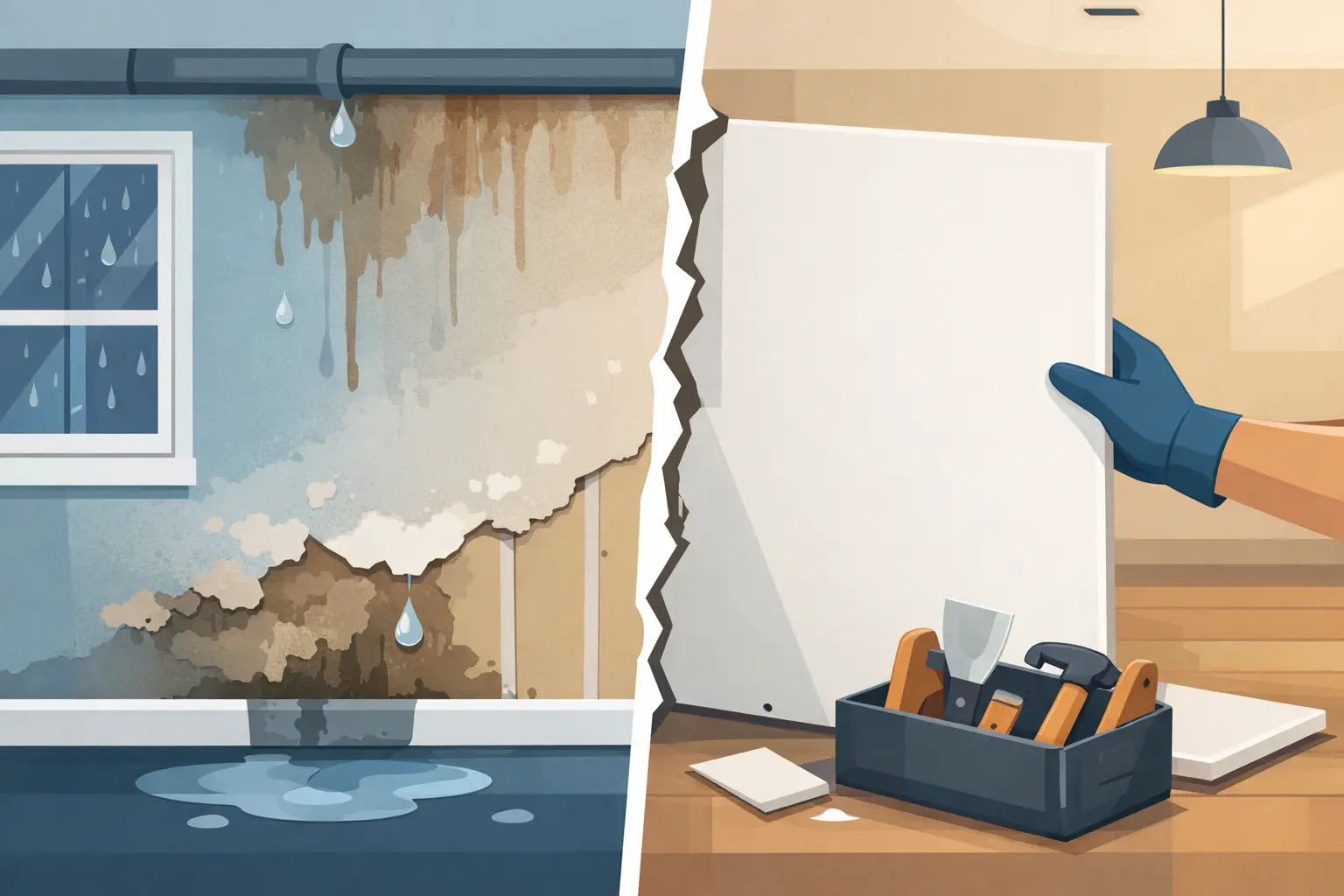
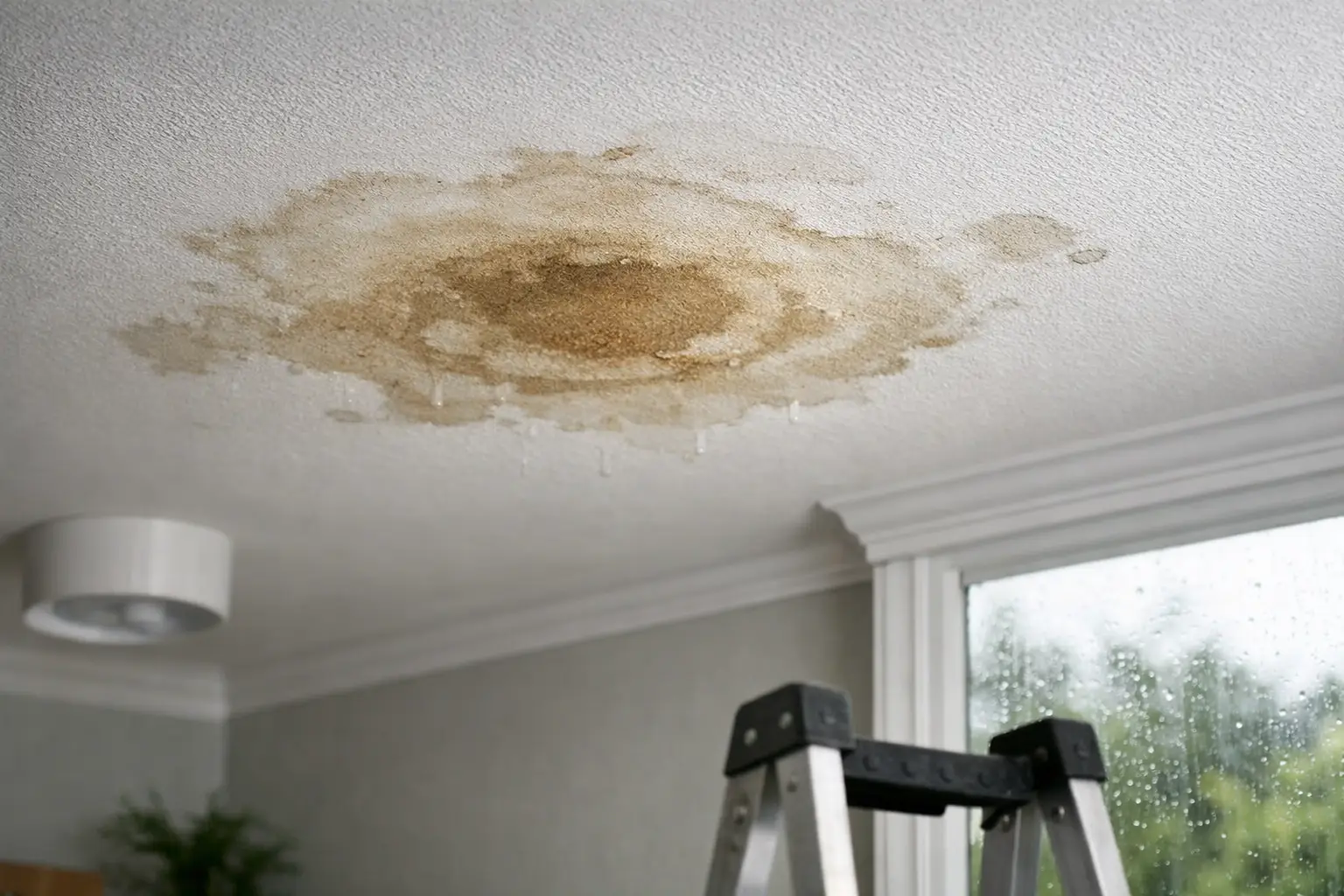
A brown ceiling stain after a roof leak can look minor on Monday and turn into a sagging, crumbling patch by Friday. That is why homeowners often ask, does water damaged drywall need to be replaced? The honest answer is sometimes yes, sometimes no. It depends on how much water got in, how long it stayed there, and whether the drywall has lost its strength, shape, or cleanliness.
Drywall cannot handle prolonged moisture. Its gypsum core softens when wet, and the paper facing can separate, stain, or support mold growth if the area stays damp. But not every water spot means the whole section has to come out. In many cases, a fast response can save part of the wall or ceiling and keep the repair more contained.
Does water damaged drywall need to be replaced in every case?
No. If the drywall got lightly wet, dried quickly, and still feels firm and flat, a crew may be able to repair it. A professional can often remove damaged texture, seal stains, patch weak spots, and refinish the area so it blends with the surrounding surface.
Replacement becomes more likely when the drywall is swollen, soft, sagging, crumbling, or moldy. Ceilings are especially sensitive because even slight water damage can affect their strength. If a ceiling bows or feels spongy, it is usually safer to remove the affected section than try to save it.
The source of the water matters too. Clean water from a one-time plumbing drip is different from repeated roof intrusion, floodwater, or sewage backup. The dirtier the water and the longer it sits, the less sense it makes to keep the drywall in place.
Signs You Can Save the Drywall
A repair is often possible when the damage stays limited and the drywall has dried thoroughly without losing its shape. If the panel remains solid to the touch, the paper is still mostly intact, and the stain has not spread far beyond the leak area, replacement may not be necessary.
You may also be dealing with cosmetic damage more than structural damage. Water can leave yellow or brown staining, bubbling paint, or a rough texture line even after the material underneath has dried. In that situation, the real job is stopping the leak, confirming the cavity is dry, then repairing and refinishing the surface correctly.
This is where experience matters. A patch that looks easy on paper can stand out badly if the finish does not blend into the existing wall or ceiling texture. Older homes in Monroe and Southeast Michigan often have mixed surfaces, patched plaster, or textures that take a skilled hand to match cleanly.
When replacement is the better call
Once drywall loses integrity, patching over it does not fix the real problem. If it feels soft when pressed, flakes apart at the edges, or has visible swelling, the material has already changed. It may dry looking better than it really is, but that does not mean it has regained its original strength.
Ceiling damage deserves extra caution. Wet ceiling drywall can sag under its own weight. Even if it has not collapsed, the fasteners may loosen and the panel can continue to pull away. In those cases, cutting out and replacing the affected area is usually the more durable option.
Mold risk is another reason replacement makes sense. If the paper facing stayed wet for more than a day or two, especially in a humid room or enclosed cavity, mold can begin to grow. Sometimes it is visible. Sometimes it is hidden behind the surface. If there is a musty odor, dark spotting, or a history of repeated leaks, removal is often the right move.
What determines whether repair or replacement makes sense
The first factor is duration. Drywall that got wet briefly and dried fast has a much better chance than drywall that sat damp for several days. The second is extent. A small stained area under a resolved leak is very different from water that traveled across joists, down framing, and into multiple wall cavities.
The third factor is location. Bathrooms, basements, and lower ceilings near plumbing lines often hold moisture longer. Exterior walls can also stay damp if insulation traps water inside the cavity. What looks dry on the surface may still be wet behind it.
Then there is finish quality. Even if a crew could technically patch a damaged area, that does not always make it the best choice. If the surrounding material is weak or the damage line is wide, a clean replacement can produce a flatter, stronger, less visible result.
Does water damaged drywall need to be replaced after a leak is fixed?
Fixing the leak is only the first step. You still need to evaluate the drywall after the source is under control. Many people stop the plumbing issue or roof issue and assume the wall will be fine once it dries. Sometimes it is. Sometimes the visible stain is the smallest part of the problem.
A proper assessment looks at the face of the drywall, the firmness of the board, the condition of joints and fasteners, and the moisture conditions inside the cavity. If the framing and insulation are still wet, closing everything back up too soon can lead to recurring damage.
That is one reason professional repair tends to hold up better. The goal is not just to cover the mark. It is to make sure the damaged section is sound, dry, and finished to match so you are not revisiting the same area a few months later.
Common situations homeowners run into
A small roof leak around a vent or flashing issue may leave a ceiling stain but only damage a limited section of drywall. If you catch it early, that area might only need a targeted cutout and patch. A burst pipe behind a wall often causes more hidden damage because water runs down studs and soaks insulation before showing on the paint surface.
Bathroom leaks can be deceptive too. Slow leaks around tubs, showers, and toilets may not flood a room, but they can keep drywall damp long enough to weaken it. By the time the paint bubbles or the baseboard swells, replacement is often part of the repair.
Flooding is a different category altogether. If drywall has absorbed contaminated water or sat wet near the floor after a basement or storm event, removal is usually the safer route. Clean appearance does not equal clean material.
Why quick action matters
The longer wet drywall stays in place, the fewer repair options you have. Stains set deeper, paper delaminates, joints loosen, and mold risk goes up. What could have been a contained drywall repair can turn into a larger tear-out if you leave the problem alone.
Quick action also protects the finish quality of the room. Water damage rarely stays perfectly inside one square spot. It creeps, wicks, and spreads. Addressing it early gives you a better chance of limiting how much texture, paint, and surrounding material a crew has to disturb.
For homeowners and property owners, that usually means less downtime and a cleaner final result.
Getting the repair done right
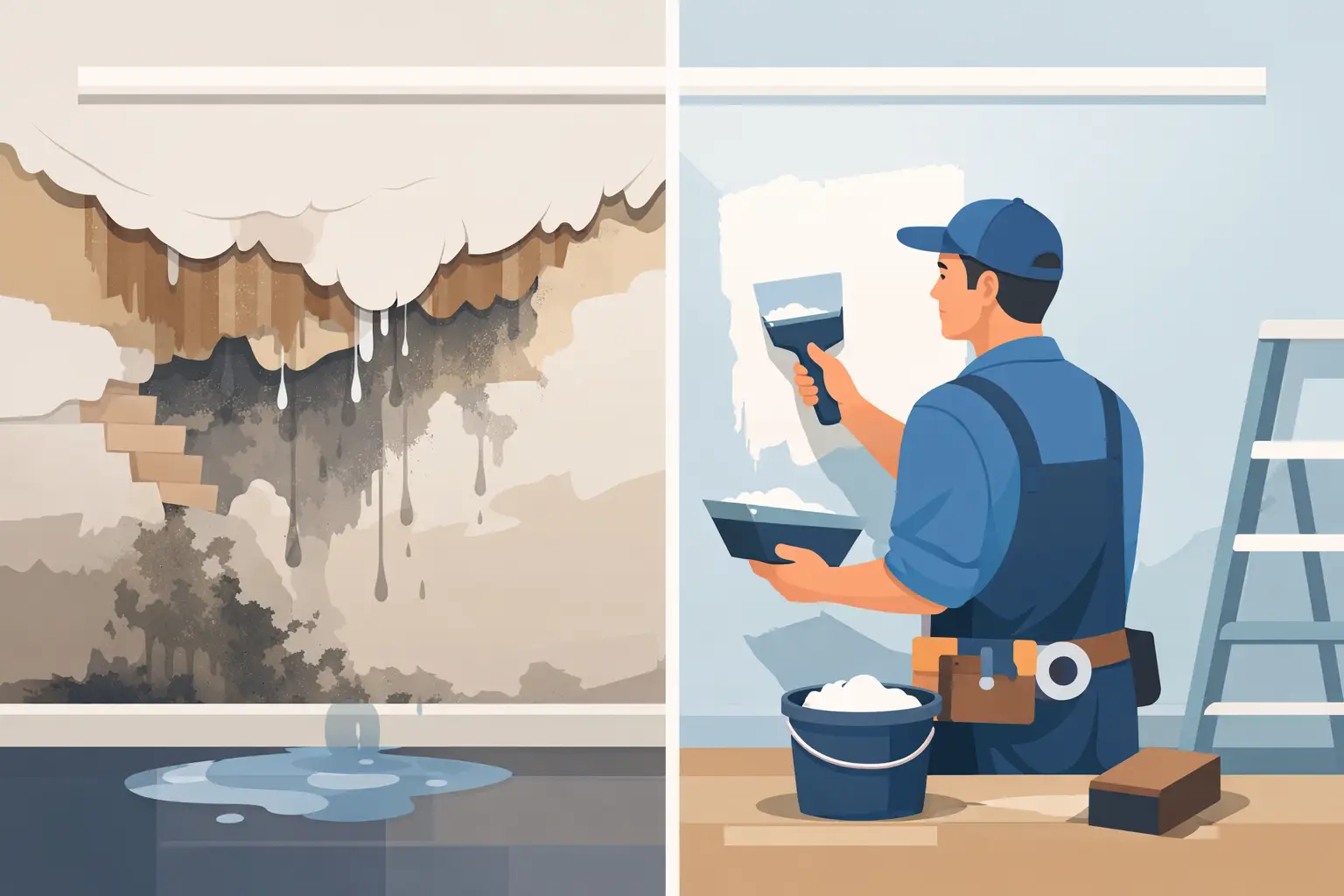
The best water damage repairs balance judgment with workmanship. Some areas absolutely need replacement. A crew can often save others with proper drying, sealing, patching, and refinishing. The mistake is assuming every stain is minor or that every damaged panel needs to come out.
A skilled drywall contractor looks at the condition of the board, not just the appearance of the stain. They also pay attention to the finish. A repair that is structurally sound but visibly patched across the middle of a ceiling is not a complete job.
At TDM Drywall, that practical approach matters because customers are not just trying to remove damage. They want a contractor who makes the wall or ceiling look right again, keeps it holding up over time, and knows when to repair versus when replacement is the smarter investment.
If you are staring at a stain, soft spot, or sagging ceiling after a leak, do not guess based on surface appearance alone. A crew can sometimes repair water damaged drywall, but when the material has weakened, gotten contaminated, or held moisture too long, replacement is usually the right call. A careful inspection now can save you from a bigger and more expensive repair later.
Our water damage repair services include exactly this kind of assessment for homes and businesses throughout Monroe and the Downriver area.


Leave A Comment