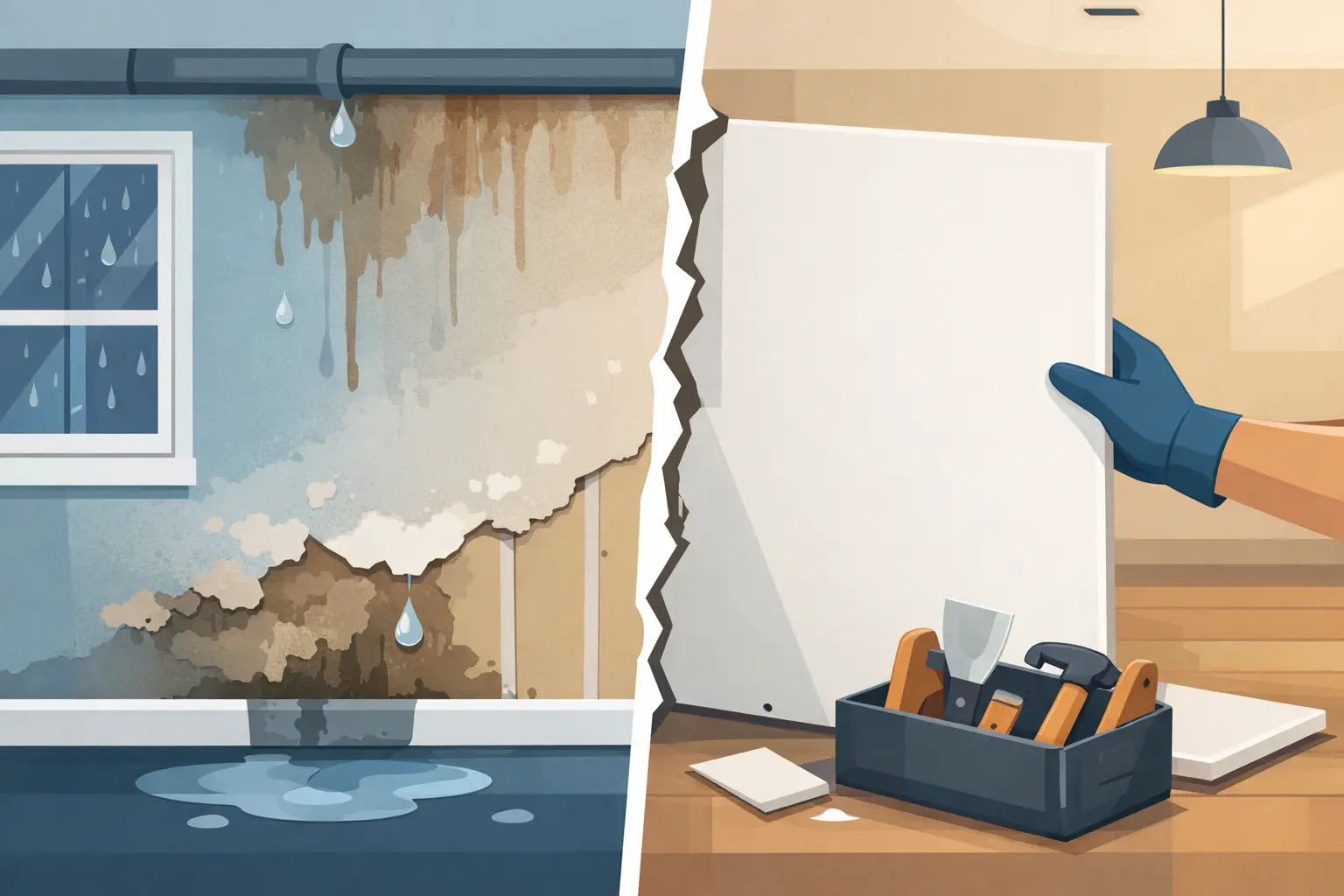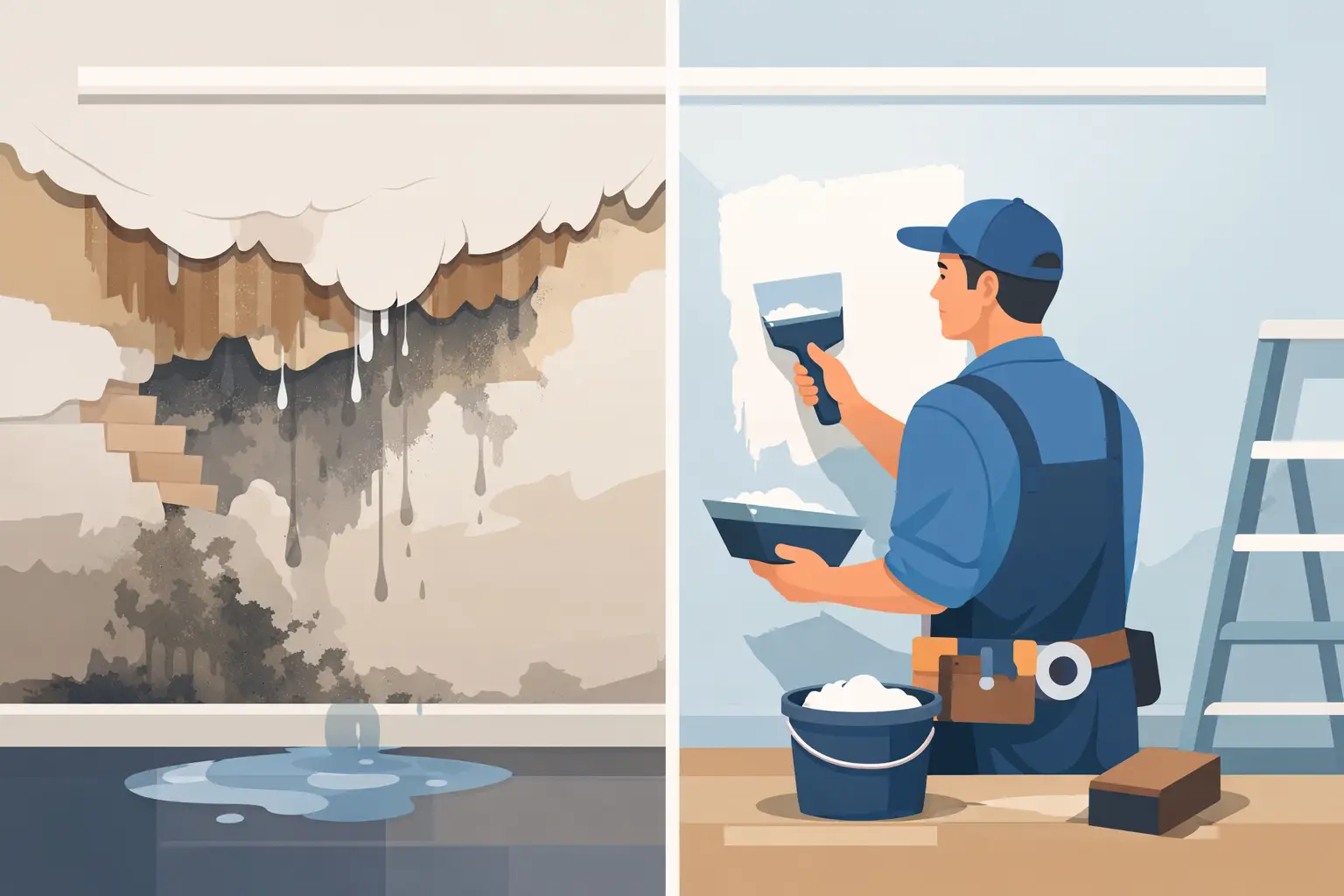

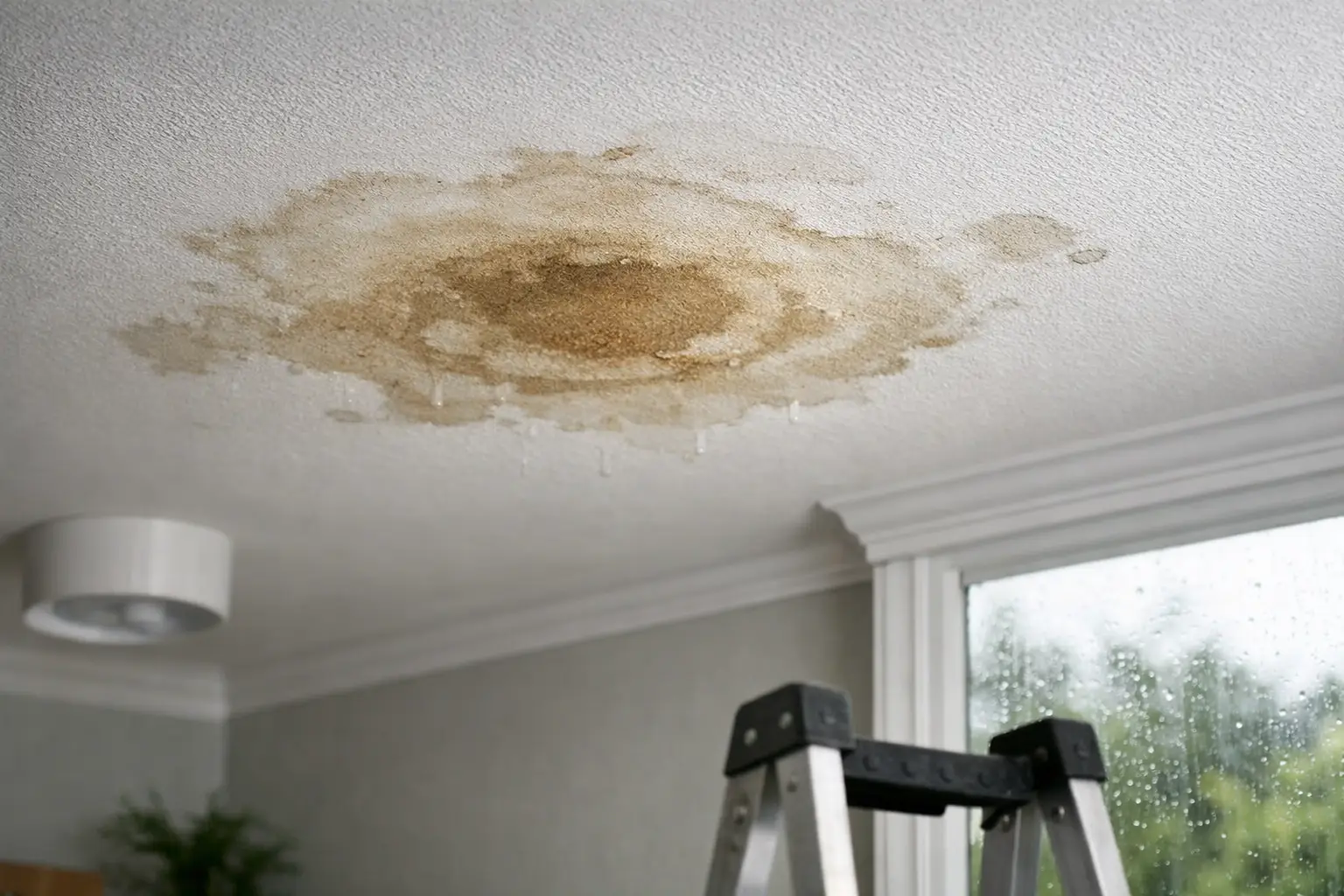
A brown ring spreading across the ceiling after a hard Monroe County rain is not a paint problem. Ceiling stains after rain usually mean water has found a path through the roof system, attic, exterior flashing, or a nearby penetration and has reached the drywall. The visible mark may be small, but the moisture behind it can soften drywall, stain insulation, feed mold growth, and turn a straightforward repair into a larger project if it is ignored.
The right order matters: stop the water source first, dry the area thoroughly, then repair the ceiling. Covering a stain with primer before the leak is corrected only hides evidence while the damage continues.
Why ceiling stains after rain need prompt attention
Drywall creates a smooth, durable interior surface, but it cannot handle staying wet. When water enters the paper facing or gypsum core, the ceiling can discolor, swell, sag, crack, or lose its attachment to the framing above.
A stain that appears only after rain often points to an exterior source, such as the roof or flashing, rather than a continuously leaking supply line or plumbing fixture. Still, water travels. A roof leak can enter several feet away from the stain, run along roof decking or framing, and finally drip at the lowest point. The location of the ceiling stain is useful, but it is not always the location of the roof failure.
For homeowners, the immediate concern is safety. A ceiling that is noticeably bowed, soft to the touch, actively dripping, or cracking around the wet area may be holding water. Keep people, furniture, and electronics out from under it. If water is near a ceiling light, fan, or electrical fixture, turn off the affected circuit if it is safe to do so and contact a qualified electrician or restoration professional as needed.
What commonly causes a stain after rainfall?
Roof damage is the most common explanation, particularly after wind-driven rain, heavy storms, or repeated freeze-thaw cycles common in Southeast Michigan. Missing or damaged shingles, worn flashing around chimneys and walls, failed pipe-boot seals, compromised valleys, and aging roof penetrations can all let water in.
Clogged or damaged gutters can contribute as well. Water that backs up at the roof edge can work into vulnerable areas, especially where fascia, soffit, and roof flashing have deteriorated. Ice dams can create a similar issue during winter. Meltwater backs up under shingles and may appear indoors as ceiling staining long after the snow event begins.
Not every stain is a roofing issue. Condensation in an attic can wet the underside of roof decking when ventilation or insulation is inadequate. A bathroom exhaust fan that terminates in the attic instead of outdoors can add substantial moisture. In some homes, a plumbing leak happens to become visible during rainy weather, making the timing misleading. A professional inspection should consider all of these possibilities before drywall work starts.
Clues that help narrow down the source
A stain directly below a roof valley, chimney, skylight, vent pipe, or exterior wall is more likely connected to flashing or roofing. A spot below a bathroom, kitchen, or second-floor laundry room may point to plumbing, although rain timing should not be dismissed.
Pay attention to the pattern. A stain that becomes darker or grows during each storm suggests active intrusion. A dry, unchanged stain may be old damage from a leak that a crew already fixed, but you should still check it for softness, staining, and hidden deterioration. Musty odors, peeling paint, bubbling texture, and recurring discoloration are all signs that moisture may still be present.
What to do before repairing the ceiling
Start by documenting the damage. Take clear photos of the ceiling stain, any dripping water, and the room below it. Note when it appears, whether it worsens during certain weather, and whether wind direction seems to matter. This information helps a roofer, plumber, or insurance representative identify the problem faster.
Protect the room by moving belongings away from the affected area and placing a bucket beneath active drips. If the ceiling is bulging with trapped water, do not cut into it unless you understand the risks and can safely control the water. A sudden release can damage the surrounding ceiling, flooring, and furnishings. Electrical fixtures make this situation more serious.
Next, arrange for a professional to correct the source. That may mean a roofing contractor repairing shingles or flashing, a gutter professional addressing drainage, or a plumber locating a hidden line leak. Drywall repair should wait until the area is dry and the cause is resolved. Otherwise, the next storm can damage new materials.
Drying is not simply a matter of waiting until the drip stops. Wet insulation above the ceiling may need evaluation, and the cavity may require airflow or professional drying equipment. The longer materials stay damp, the greater the chance of odor, mold, and structural deterioration.
When can a stained ceiling be repaired instead of replaced?
It depends on how long the area was wet and how much the drywall has deteriorated. A small stain on drywall that remains firm, flat, and completely dry may be repairable with stain-blocking primer and carefully matched paint. This is usually the best-case scenario, and only after a crew has fixed the leak.
If the drywall is soft, swollen, sagging, crumbling, or separated at seams, replacement is the more dependable solution. Damaged ceiling board cannot regain its original strength once the gypsum core has broken down. Trying to skim over weakened drywall can leave a visible problem and may create a safety concern if the area continues to sag.
Textured ceilings require additional care. A crew can find it difficult to blend popcorn, knockdown, orange peel, and hand-applied plaster textures when they patch only a small section. A quality repair involves removing compromised material, installing sound backing where needed, fitting new drywall, finishing the joints properly, and blending the surrounding texture so the repair does not stand out every time sunlight hits the room.
Why paint alone often fails
Water stains contain tannins, rust, and other contaminants that can bleed through ordinary ceiling paint. Even when the ceiling looks dry, a brown or yellow shadow may return after painting if the surface did not get properly sealed.
The repair process usually includes cleaning and preparing the dry surface, correcting damaged drywall or joint compound, applying a stain-blocking primer, matching texture where needed, and repainting for an even finish. The exact approach depends on the ceiling material and the extent of the water exposure. Older homes may have plaster ceilings, which need a different repair method than standard drywall.
When to call a drywall professional
Call for professional help when the damaged area is larger than a small spot, the ceiling is sagging or cracked, the texture needs matching, or there is any doubt about hidden moisture. Ceiling work is more demanding than a typical wall patch because gravity exposes poor repairs quickly. Uneven seams, flashing patches, and mismatched texture are difficult to ignore in an open room.
For property owners and remodelers, scheduling the repair after confirming the leak repair protects the investment. A skilled drywall contractor can assess whether a patch is appropriate or whether the affected sections need removal and replacement for a clean, durable result. TDM Drywall provides water-damage drywall repair, ceiling repair, drywall replacement, and texture matching for homes and commercial properties throughout Monroe and the Downriver area.
If you are filing an insurance claim, keep photos, invoices, and records of the source repair and drying work. Coverage varies by policy and by cause. Insurers may handle sudden storm-related damage differently than long-term maintenance issues, so timely documentation can make a difference.
A ceiling stain is your home giving you useful information. Address the water source, make sure the area is truly dry, and then restore the ceiling with materials and finishing work that will hold up. That approach protects more than the appearance of the room – it helps prevent the next rainstorm from becoming a bigger repair.