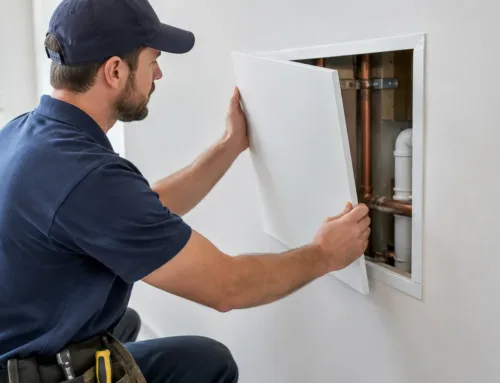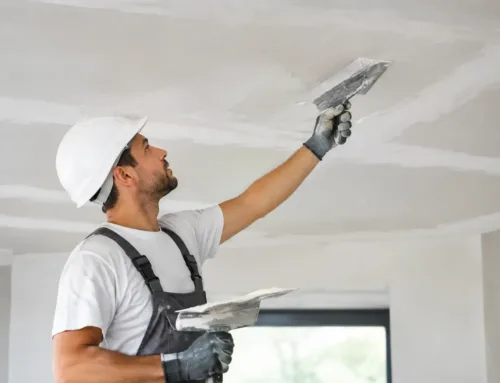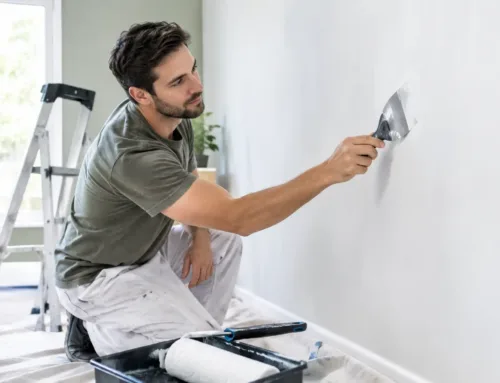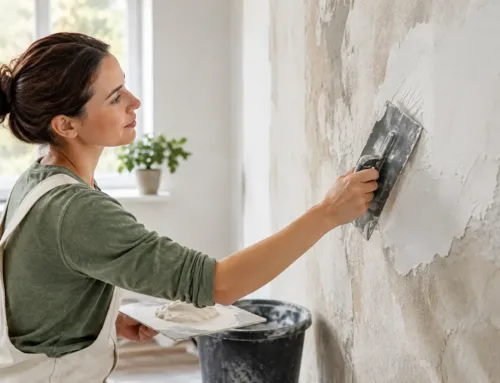

A bathroom wall can look perfectly fine on the surface while moisture slowly weakens the material behind the paint. That is why this moisture resistant drywall guide starts with a practical distinction: moisture-resistant drywall helps in humid areas, but it is not a waterproof wall system. Choosing the right board for the right location protects your finish, reduces repair risk, and helps prevent a small plumbing or ventilation problem from becoming a larger drywall replacement project.
For homeowners, remodelers, and property managers, the goal is simple: install materials that make sense for how the room is actually used. A well-finished wall still needs the right backing, proper seams, reliable ventilation, and a dry structure behind it.
What Moisture-Resistant Drywall Is
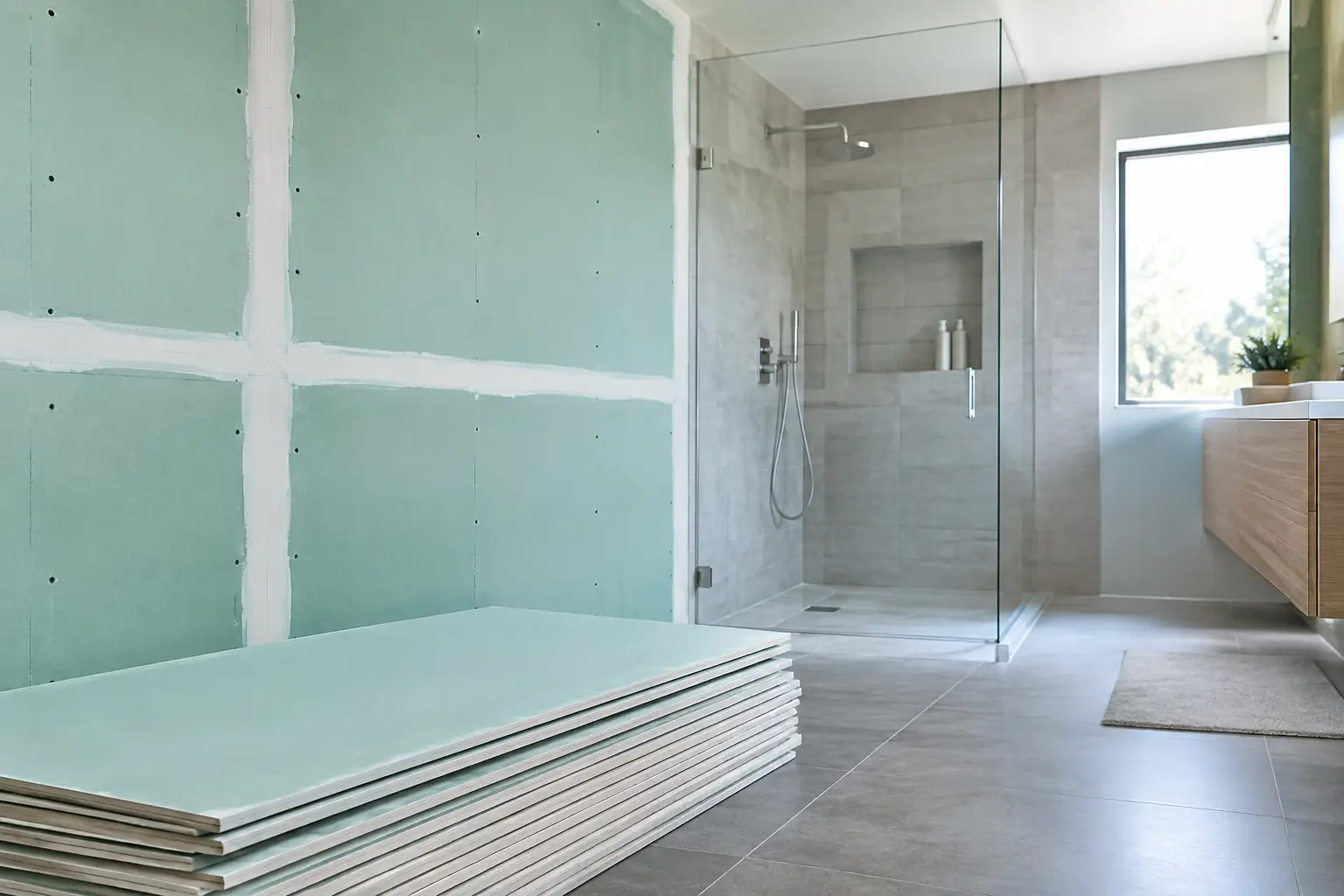
Moisture-resistant drywall is gypsum board made with a moisture-resistant core and a treated facing, often green in color. Many people call it green board, although moisture-resistant panels are available in several colors depending on the manufacturer.
Compared with standard drywall, it is better able to handle high indoor humidity and occasional exposure to damp conditions. It is commonly used on bathroom walls outside the shower area, laundry rooms, utility rooms, kitchens, basements, and other spaces where humidity can be higher than normal.
The key word is resistant. This material does not make a wall waterproof, and it will not stay sound if it is repeatedly soaked by a leaking pipe, failed shower surround, flooding, or direct spray from a showerhead. It is a useful part of a moisture-management plan, not a substitute for one.
Where Moisture-Resistant Drywall Makes Sense
In many homes throughout Monroe and Southeast Michigan, moisture-resistant drywall is a smart upgrade in rooms that deal with steam, condensation, or occasional splashing. A properly ventilated bathroom is one of the most common examples. It can also work well for walls around tubs when those walls are outside the tiled or enclosed wet zone.
Laundry rooms are another good fit. Washing machine hoses, utility sinks, humidifiers, and exterior-wall condensation can all introduce moisture. In a finished basement, the decision depends on the basement’s condition. If the foundation, drainage, insulation, and humidity are under control, moisture-resistant drywall can provide extra protection. If the basement has ongoing dampness or water intrusion, drywall of any type may not be the right first solution.
Kitchens and half-baths can benefit as well, particularly near sinks or in homes where ventilation is limited. The material is not always required in every one of these locations, but it can be worthwhile when the added material cost is small compared with the cost of opening and repairing a damaged wall later.
Where It Should Not Be Used Alone
A shower enclosure, a tiled tub surround, and other direct-wet areas need a true tile backer or waterproofing system. Cement board, foam backer board, and approved waterproof panel systems are designed for these conditions when installed according to the product requirements.
Installing moisture-resistant drywall behind tile in a shower can create a hidden failure point. Grout and tile are not waterproof by themselves. Once water reaches ordinary drywall products repeatedly, the paper facing and gypsum core can deteriorate, and mold may develop where it cannot be seen.
Ceilings also deserve special attention. A bathroom ceiling may be exposed to steam, but it must support its own weight over time. The right panel thickness, framing spacing, fastener pattern, and ventilation matter more than simply choosing a moisture-resistant sheet. Sagging ceiling board is often a sign that moisture, installation details, or both were not handled correctly.
Choosing the Right Board for the Room
The best material depends on the location, the finish planned for the wall, and the source of moisture. Before installing, consider four practical questions:
- Will the wall receive direct water exposure or only humidity?
- Is there a working exhaust fan that vents outdoors?
- Has the room had leaks, flooding, or foundation moisture problems?
- Will the surface be painted, tiled, or covered with another finish?
For a painted bathroom wall with normal humidity, moisture-resistant drywall may be appropriate. For a shower wall, use an approved wet-area backer and waterproofing approach. For a basement that has a history of seepage, address the water source before closing the wall with any drywall product.
Mold-resistant drywall is another option that is sometimes confused with moisture-resistant drywall. Mold-resistant products may use fiberglass facings or other materials that do not provide the same food source for mold as paper-faced drywall. They can be a good choice in certain projects, but they still cannot solve a plumbing leak or chronic humidity problem. Product selection should follow the manufacturer instructions and the conditions in the room.
Installation Details That Protect the Finish
Even the right board can fail when installation is rushed. Clean, durable results begin before the first sheet goes up. Framing should be dry, straight, and free from signs of active leaks. Any damaged insulation, wet wood, or mold growth needs to be addressed before the wall is closed.
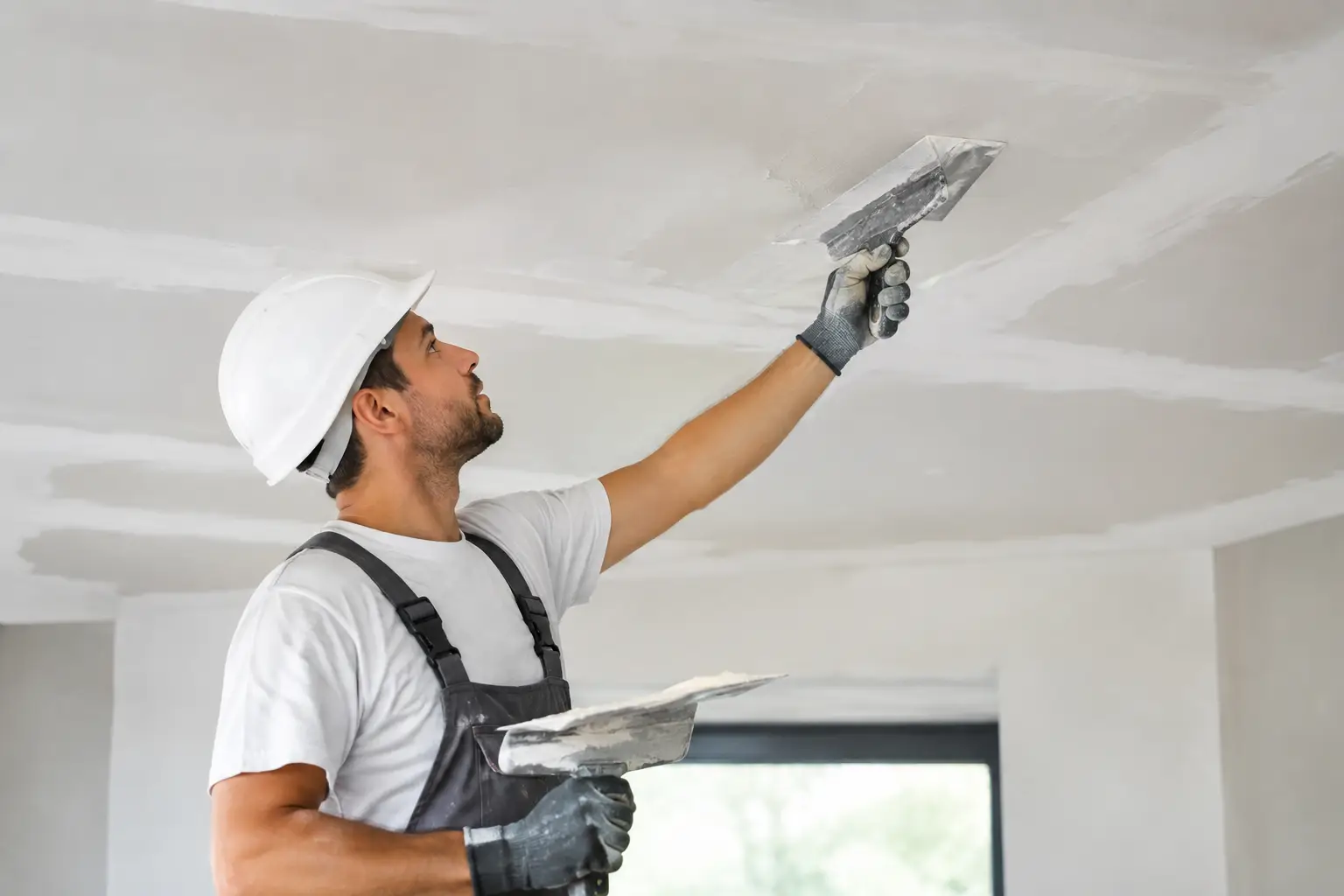
Panels should be fastened correctly and installed with joints that are properly supported. Fasteners set too deep can break the face of the board and reduce holding strength. Fasteners left proud create finishing problems and can show through paint. At corners, openings, and ceiling transitions, careful layout helps reduce cracking and avoids unnecessary seams.
Finishing materials matter too. Joint compound, tape, corner bead, primer, and paint need to be selected for the application. In a humid room, a quality bathroom-rated paint and a properly working exhaust fan do more for long-term performance than a high-priced wallboard alone.
A good exhaust fan should remove moisture to the outside, not into an attic or enclosed soffit. It should also be sized and used consistently. Running the fan during a shower and for a period afterward gives steam time to leave the room instead of settling on ceilings, walls, and trim.
Signs Drywall Has Already Been Damaged by Moisture
Moisture damage is not always dramatic. A yellow or brown stain is an obvious warning, but other clues can be more subtle. Watch for peeling paint, soft spots, a bubbling surface, musty odors, loose baseboards, cracked tape, or a ceiling that begins to sag.
A repair should start with finding the source. Replacing stained drywall without correcting a roof leak, plumbing leak, failed caulk joint, or ventilation issue only postpones the problem. Once the area is dry and the cause has been fixed, damaged drywall can be removed, the framing inspected, and the replacement matched to the room’s conditions.
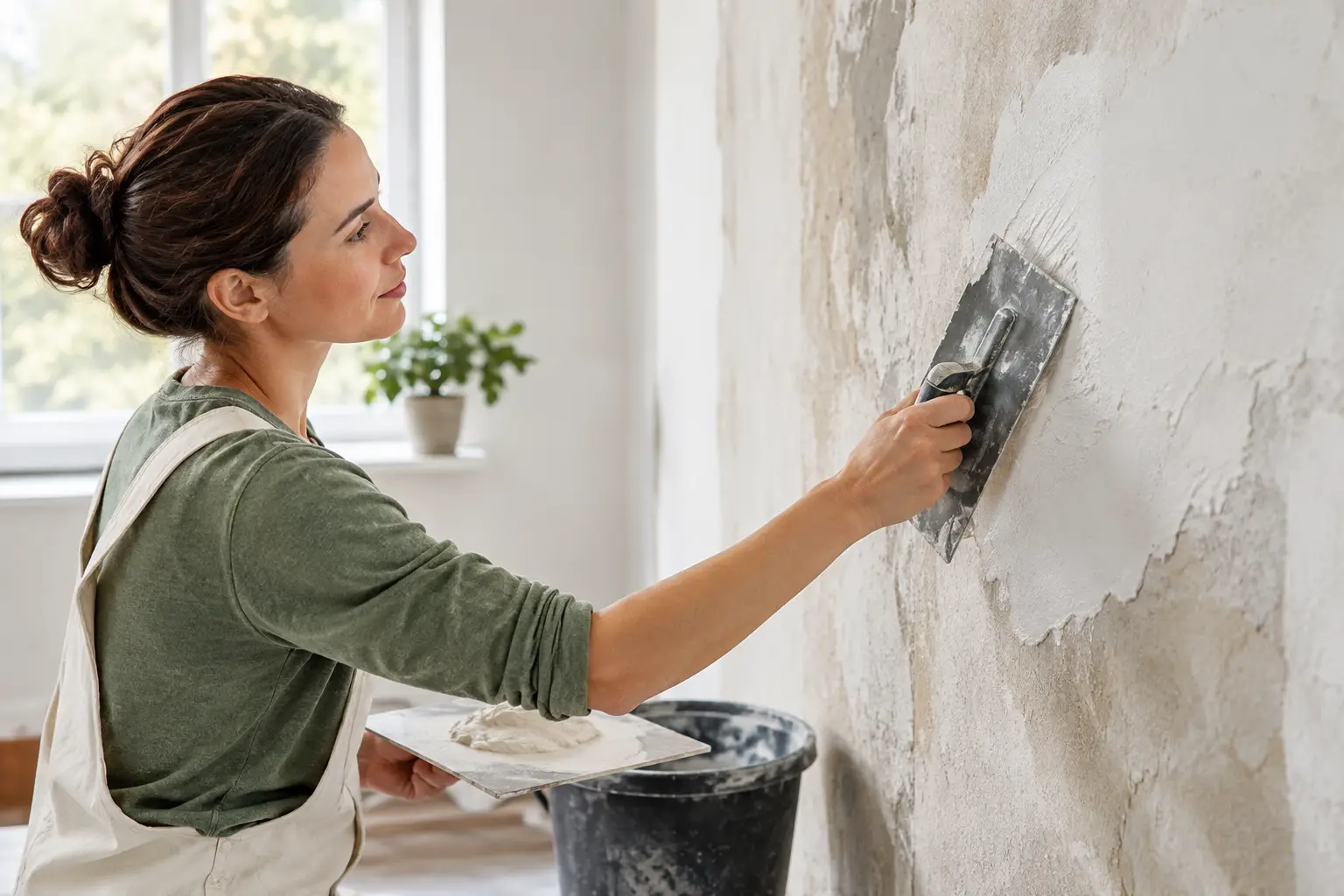
Texture matching is often the part homeowners notice most after a repair. A smooth patch in the middle of an orange-peel wall, knockdown ceiling, or older plaster surface can stand out after painting. Professional repair work focuses on more than covering the hole. It restores the plane of the wall, blends the texture, and leaves a paint-ready finish that does not draw attention to the repair.
When Professional Help Is Worth It
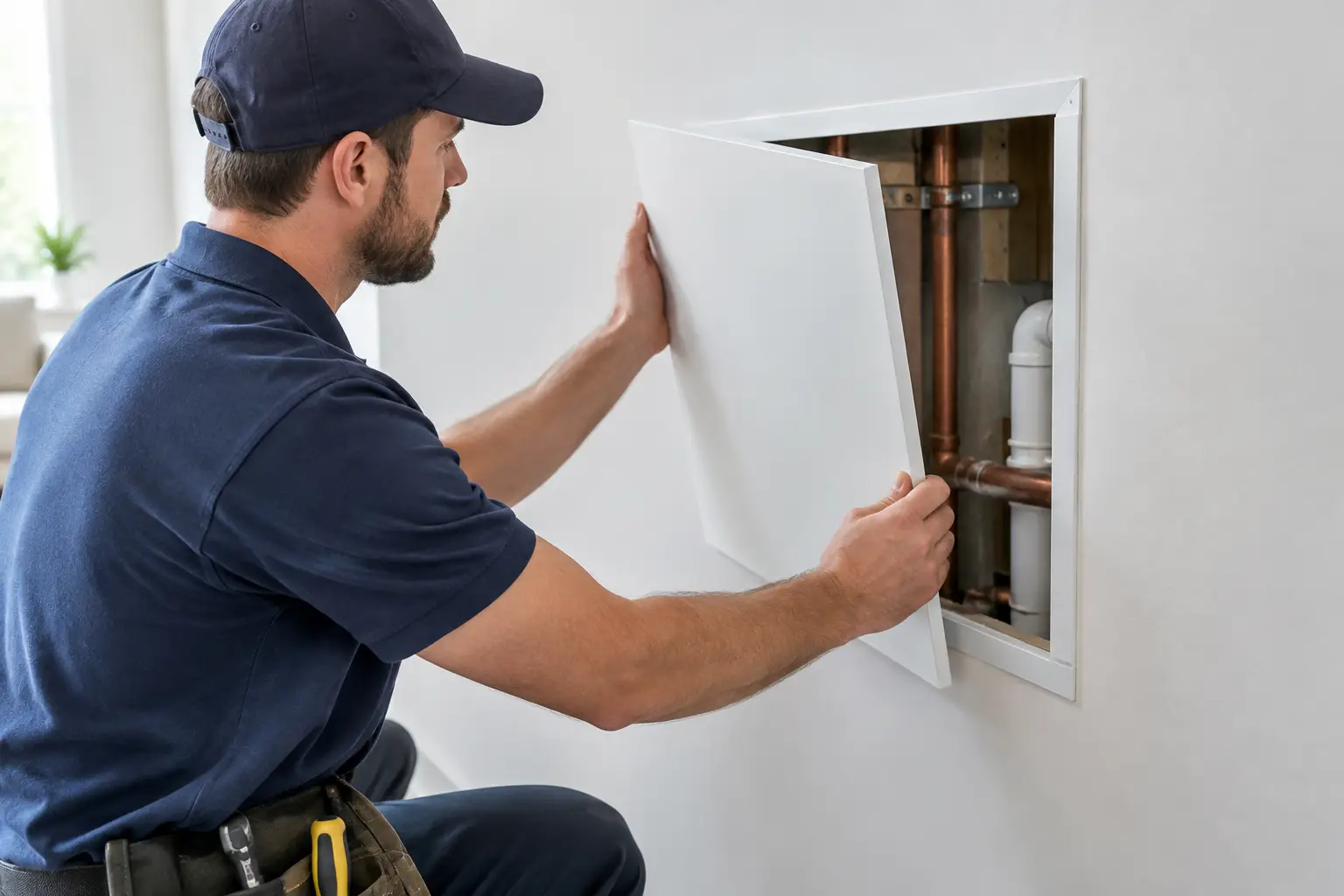
Small, dry cosmetic repairs can be manageable for an experienced homeowner. Larger water-damaged areas are different. If the drywall is soft, mold is suspected, the ceiling is sagging, insulation is wet, or the damage is close to electrical fixtures, a professional assessment can prevent missed issues behind the surface.
TDM Drywall brings more than 32 years of hands-on experience to drywall repair, replacement, finishing, and texture matching for homes and commercial properties. The work begins with an honest look at the damaged area and the conditions that caused it, then focuses on a clean, durable repair rather than a quick cover-up.
The right drywall choice is rarely about buying the most expensive panel. It is about matching the material to the moisture level, correcting water problems early, and finishing the wall carefully so it stays sound and looks right for years to come.