
A ceiling finish can change the entire feel of a room before anyone notices the walls, flooring, or furniture. When comparing a smooth ceiling vs textured finish, the right choice comes down to more than appearance. It affects how light moves through the room, how easily future repairs blend in, how much prep the surface needs, and how the space will hold up over time.
For homeowners across Monroe and Southeast Michigan, the decision often comes up during a remodel, water-damage repair, popcorn ceiling removal, or drywall replacement. Both finishes can look excellent when installed correctly. The key is choosing the one that fits the home, the room, and the condition of the existing ceiling.
Smooth Ceiling vs Textured: The Main Difference
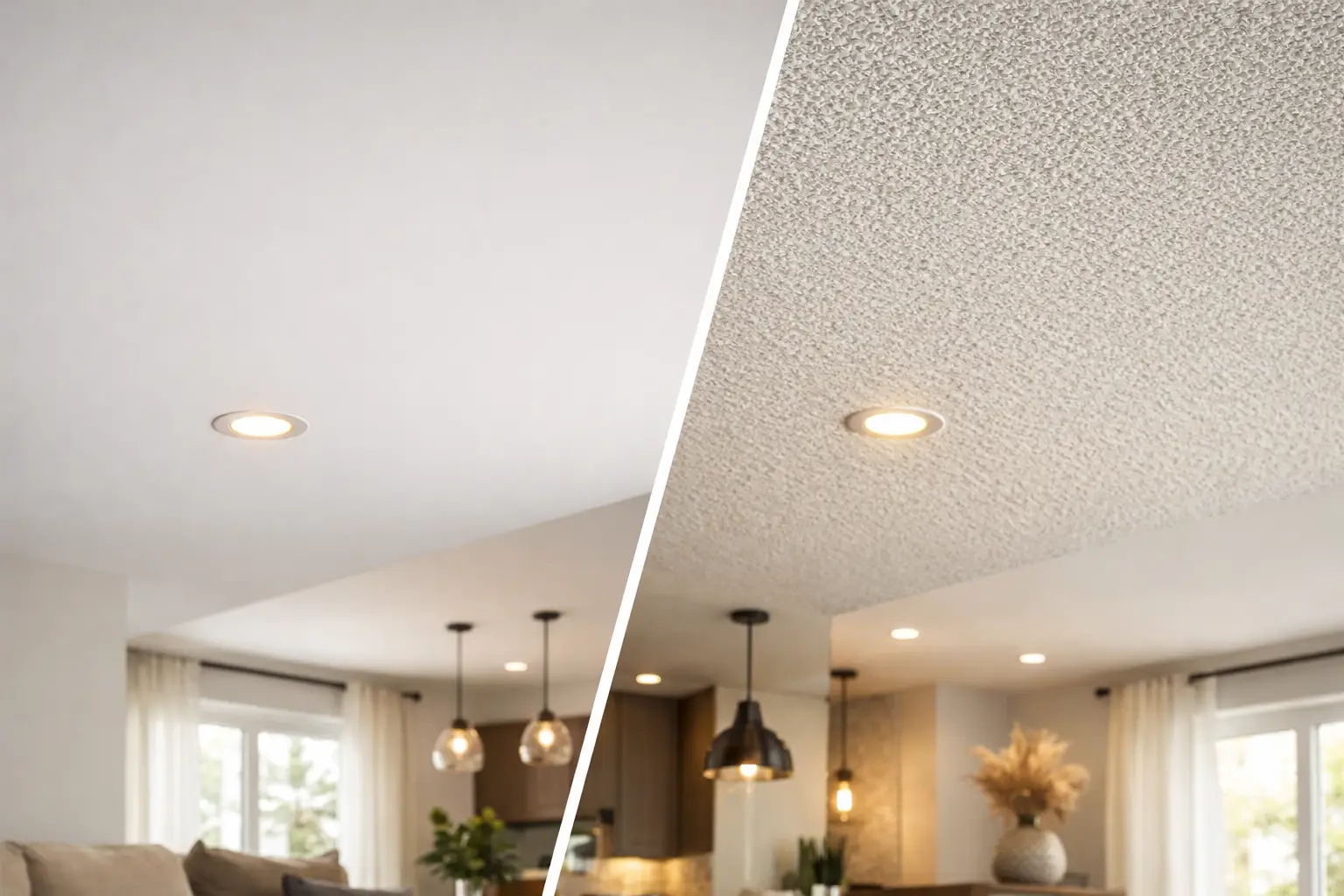
A smooth ceiling has a flat, level surface finished to look clean and uniform. It is typically coated, sanded, and prepared for paint with close attention to seams, fasteners, patches, and drywall joints. Smooth ceilings are common in newer homes, remodeled spaces, modern interiors, and rooms where homeowners want a bright, refined look.
A textured ceiling has a deliberate pattern applied over the drywall surface. Common finishes include knockdown, orange peel, stomp, and older popcorn textures. The texture can be subtle or pronounced, depending on the application method and the style of the home.
Neither option is automatically better. A smooth ceiling makes the workmanship underneath more visible. A textured ceiling adds visual softness and can help disguise minor imperfections, but it may be harder to match if part of the ceiling needs repair later.
Why Homeowners Choose Smooth Ceilings
Smooth ceilings have a clean appearance that works with nearly any design style. They reflect light evenly, making bedrooms, living rooms, kitchens, and finished basements feel more open. For homeowners updating an older property, replacing an outdated texture with a smooth finish can make the room feel more current without changing the layout.
They are also easier to clean. Dust, cobwebs, and residue have fewer places to collect on a smooth surface, and repainting is generally more straightforward. This can be especially useful in kitchens, hallways, rental properties, and commercial spaces where regular maintenance matters.
The trade-off is that smooth work demands more precision. Drywall joints, repaired areas, fastener lines, and uneven framing can show through if the ceiling is not properly finished. Sunlight from large windows and angled lighting can reveal flaws that are nearly invisible under a heavier texture. A paint-ready smooth ceiling requires careful taping, coating, sanding, and inspection before paint goes on.
Smooth Ceilings Work Well When
A smooth finish is often a strong choice for newer construction, additions, whole-room remodels, and ceilings being replaced from wall to wall. It also makes sense when the walls already have a clean, modern finish and the homeowner wants the ceiling to match.
It may be less practical when only one small section of an older, heavily textured ceiling is being repaired. In that situation, matching the surrounding finish can create a more natural result and avoid turning a simple repair into a full-ceiling refinishing project.
The Benefits of a Textured Ceiling
Texture is not just a shortcut or an outdated finish. Applied well, it can give a room character and help create a consistent look throughout an existing home. Light textures such as orange peel or knockdown remain common because they soften the ceiling surface without making it feel heavy.
A textured finish can also be forgiving. Minor surface variations, shallow repairs, and small framing differences are less noticeable under texture than they are under a perfectly smooth finish. That does not mean texture eliminates the need for quality drywall repair. Damaged drywall, loose tape, water staining, and sagging areas must still be corrected before any finish is applied. It simply gives the final surface more visual flexibility.
For homes with existing textured walls or ceilings, a professional texture match can be the most cost-effective way to restore a damaged area without refinishing the entire room. The goal is not simply to add texture. It is to blend the size, pattern, depth, and direction of the surrounding finish so the repair does not stand out after painting.
Texture Is Not Always the Easy Option
Textured ceilings can collect more dust than smooth ones, especially with heavier patterns. Repainting may require more paint and care to reach all parts of the surface. If a future leak, crack, or access opening damages the ceiling, the repair will need a close texture match.
Older popcorn ceilings deserve special consideration. Popcorn can date a room, catch dust, and be difficult to repair cleanly. In homes built before the mid-1980s, it should also be tested for asbestos before removal or disturbance. Professional evaluation helps homeowners understand whether removal, repair, encapsulation, or replacement is the safest and most practical path.
Cost Depends on Prep, Not Just the Finish
Homeowners sometimes assume that a smooth ceiling will always cost more than a textured one. Often it does, but the surface condition is the real deciding factor.
A smooth ceiling can require extensive preparation when there are visible seams, prior patches, multiple paint layers, uneven drywall, or old texture that must be removed. Achieving a truly uniform finish takes skilled labor because each coat of compound and each sanding step affects the final result.
Texture can be more economical in certain repairs because it helps blend the restored area with the rest of the ceiling. However, a detailed custom texture match can still require time and experience. Heavy texture removal, water-damage restoration, and ceilings with structural movement can add preparation regardless of the finish selected.
The most accurate way to compare costs is to look at the full scope: repair the underlying problem, replace compromised drywall if necessary, finish the surface properly, match or change the texture, and prepare it for paint. A low quote that skips proper prep can leave visible seams, recurring cracks, or a patch that stands out every time the light hits it.
Consider the Room Before Choosing a Finish
The best ceiling finish can vary from room to room. A smooth ceiling is often preferred in living rooms, primary bedrooms, dining rooms, and open-concept areas where clean lines and natural light are priorities. It is also popular after popcorn ceiling removal because it gives the room a finished, updated appearance.
A subtle texture may make more sense in utility areas, garages, basements, rentals, hallways, and rooms where matching an existing finish is more important than creating a completely new look. In a basement, for example, the choice may depend on ceiling height, lighting, ductwork access, and whether the space is intended as a finished family room or a practical utility area.
If the room has strong side lighting from windows, recessed fixtures, or a ceiling fan with bright bulbs, smooth drywall finishing must be especially well done. Side lighting can highlight ripples, joints, and patch edges. Texture can reduce that effect, though it should still be applied evenly and with intention.
Repairs Are a Major Part of the Decision
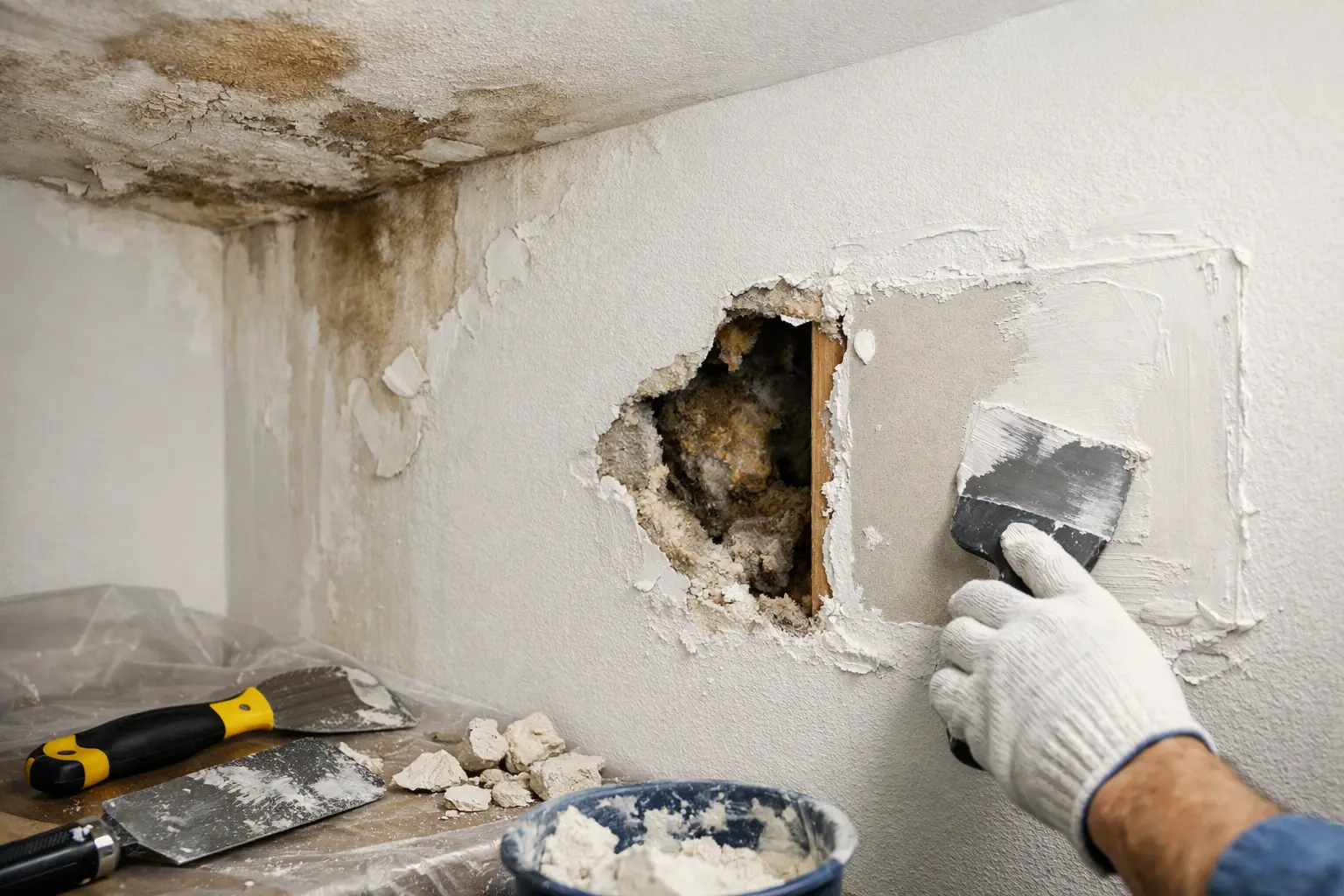
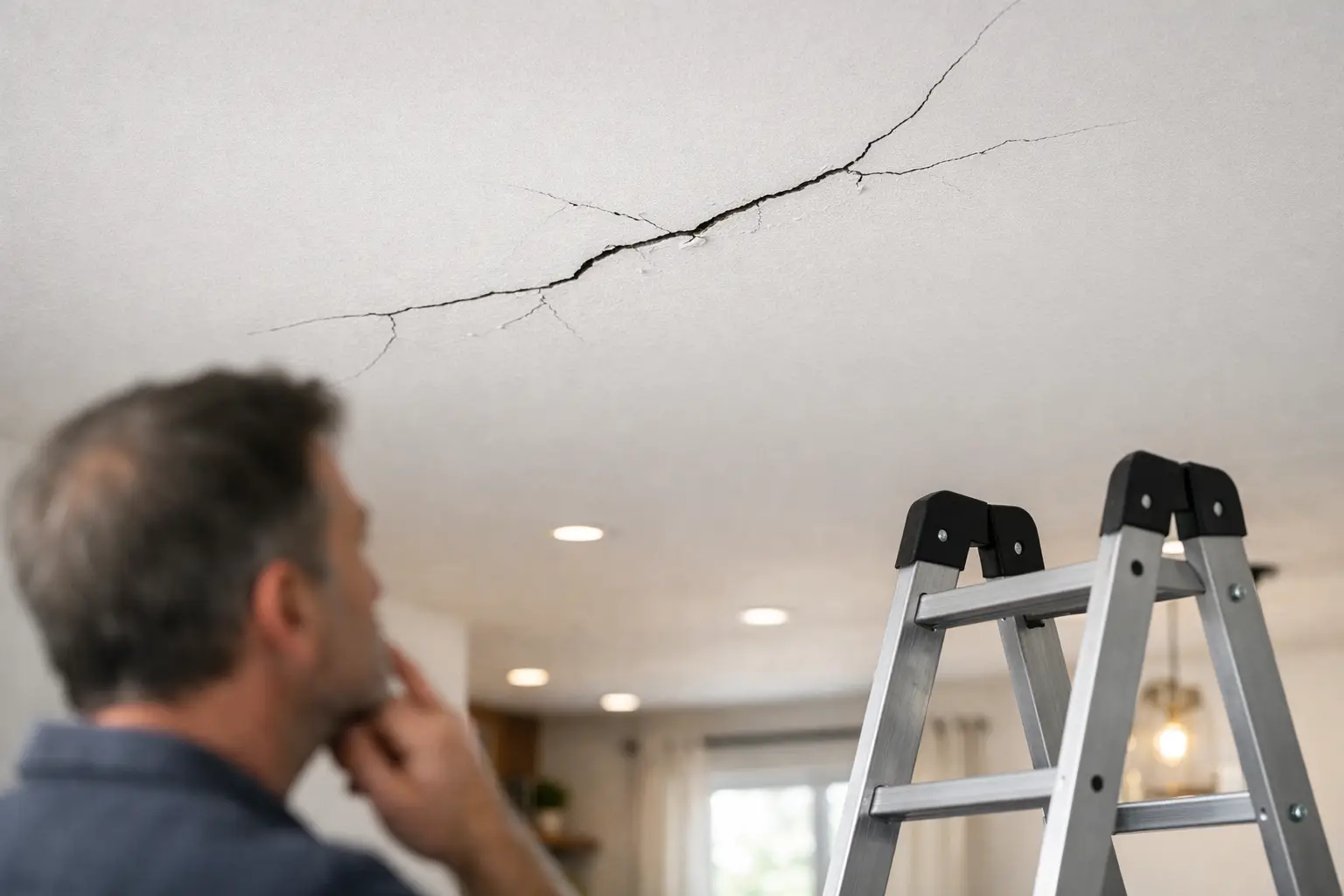
A ceiling that has been damaged by a roof leak, plumbing issue, settlement crack, or impact should not be treated as a paint-only problem. The source of moisture or movement needs to be addressed first. Once the ceiling is dry and stable, damaged drywall can be removed, replaced, taped, finished, and blended with the surrounding surface.
For a smooth ceiling, the repair needs to disappear through careful feathering and sanding. For a textured ceiling, the patch must first be flat and sound, then matched to the existing pattern. Both can produce clean results, but texture matching is one of those jobs where experience shows immediately.
A repair does not always require refinishing the entire ceiling. If the existing texture can be matched closely, a localized repair may be the sensible choice. If the ceiling has widespread staining, multiple old patches, failing texture, or an inconsistent finish, refinishing the full surface may provide a better long-term result.
Think About the Home’s Style and Future Plans
Smooth ceilings generally have broad appeal for buyers because they look clean, simple, and current. They are a practical choice when preparing a home for sale, completing a major renovation, or updating a room with old popcorn texture.
Still, resale value should not be the only consideration. A well-maintained textured ceiling that fits the home can look far better than a poorly finished smooth ceiling. Quality work matters more than following a trend.
If you are unsure which direction fits your project, start with the condition of the ceiling and the finish in adjoining rooms. Then consider lighting, maintenance, budget, and whether the repair needs to blend into an existing pattern. TDM Drywall helps homeowners and property managers make that call with straightforward recommendations, clean workspaces, and the kind of finish that looks right after the paint dries.