
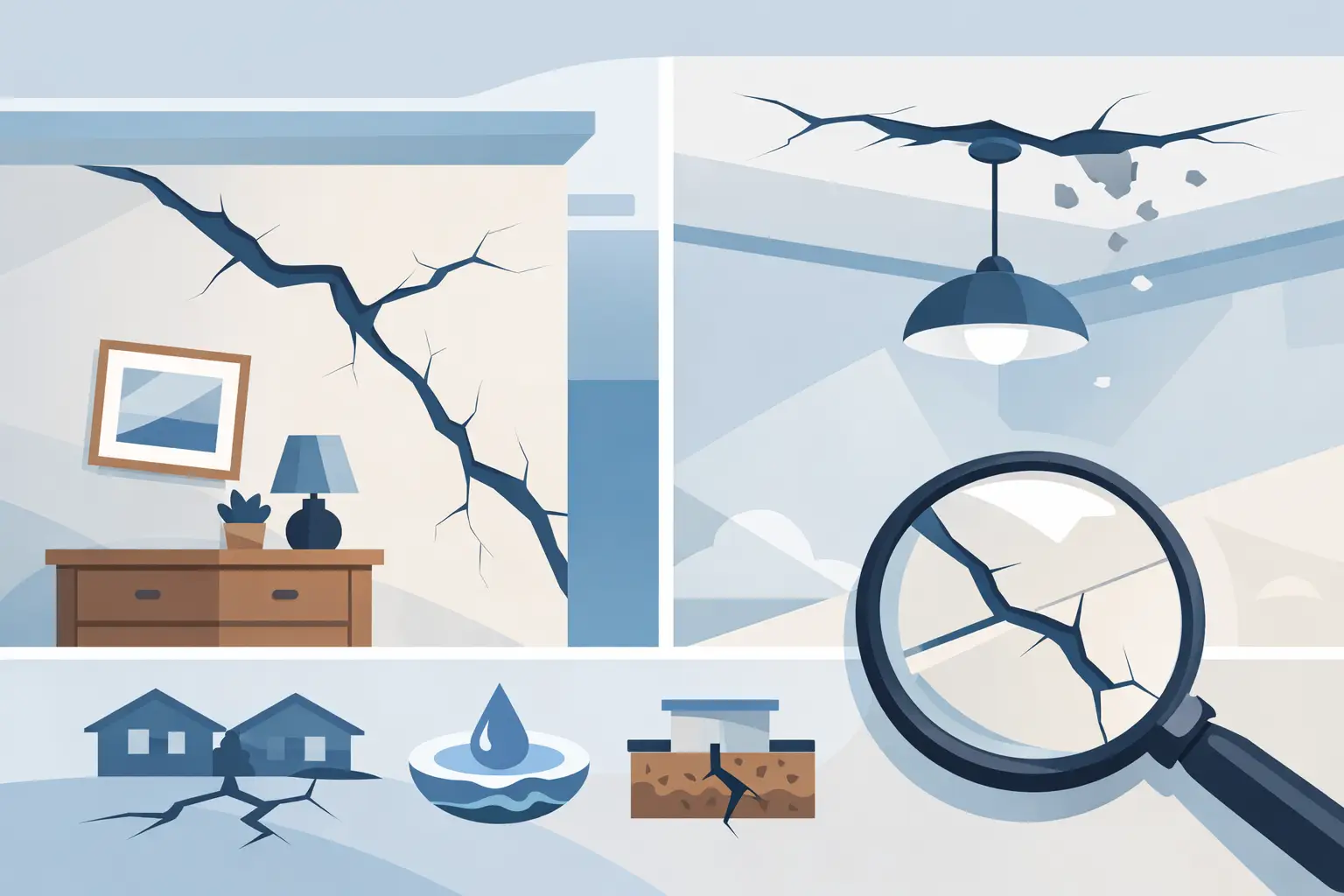
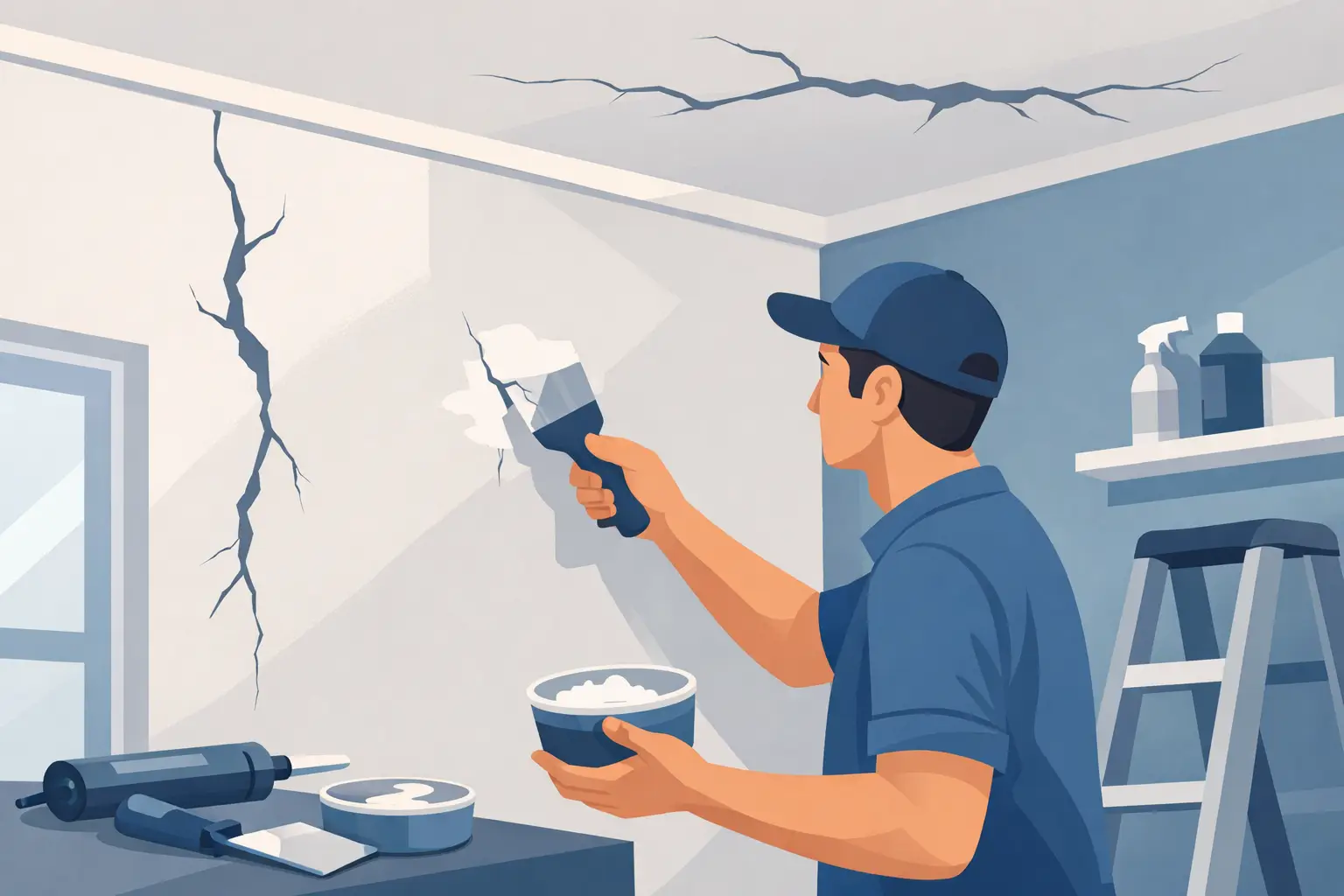
A hairline crack over a doorway might be nothing more than normal house movement. A spreading ceiling crack with staining around it is a different story. When homeowners ask what causes cracks in walls and ceilings, the real answer is that not all cracks come from the same problem, and treating them like they do usually leads to repeat repairs.
Some cracks are cosmetic. Others point to moisture, structural shifting, poor drywall finishing, or aging plaster. The key is knowing what kind of crack you are looking at, what likely caused it, and whether a simple patch will hold or fail again in a few months.
What causes cracks in walls and ceilings most often?
In most homes, cracks show up because materials move over time. Houses settle, framing expands and contracts with seasonal humidity changes, and joints in drywall or plaster take stress. That movement is normal to a point. The trouble starts when the movement is excessive, the original finish work was weak, or water gets involved.
In Southeast Michigan, freeze-thaw cycles, humidity swings, and older housing stock all play a role. Homes in this area often see a mix of natural settling and age-related wear, especially around ceilings, corners, windows, and door openings.
Normal settling and seasonal movement
A home does not stay perfectly still. Lumber shrinks and swells slightly. Trusses and joists shift with temperature and moisture changes. Foundations can settle gradually. When that happens, stress often shows up first at drywall seams and taped joints.
These cracks are usually thin and straight. You may notice them where walls meet ceilings, above doors, or along a seam line in a large ceiling. In many cases, they are more of a finish issue than a serious structural concern, but they still need proper repair if you want them gone for good.
Poor drywall finishing or weak tape joints
Sometimes the crack is not telling you the house moved too much. It is telling you the original joint was not finished well. If the tape was poorly embedded, if too little compound was used, or if the surface was repaired quickly without addressing the failed joint underneath, the crack tends to come back.
This is common in fast patch jobs. A crack gets covered, sanded, and painted, but the loose tape or unstable seam is still there. It may look fixed for a short time, then reopen as soon as the wall or ceiling moves again.
Moisture and water damage
Water is one of the biggest reasons a crack becomes more than cosmetic. A roof leak, plumbing leak, ice dam issue, or long-term humidity problem can weaken drywall and plaster, soften joint compound, and stain the surface around the crack.
Ceiling cracks deserve extra attention for this reason. If you see sagging, bubbling paint, discoloration, or soft spots near the crack, moisture may be the real cause. In that case, patching the surface before the leak is corrected is wasted money.
Structural movement
Some cracks point to bigger movement in the home itself. Foundation settling, shifting support members, overloaded framing, or long-term structural stress can create wider cracks or cracks that keep growing. These are more concerning when they run diagonally from door or window corners, appear in multiple rooms, or come with sticking doors, uneven floors, or gaps around trim.
Not every structural issue is severe, and not every diagonal crack means the house is unsafe. Still, this is where experience matters. The pattern, width, and location of the crack tell you a lot.
How crack location changes the diagnosis
Where the crack appears is often just as important as its size.
Cracks in ceilings
Ceilings tend to show stress at seams, especially in larger rooms. Straight cracks can form where drywall panels meet, and older homes may show plaster cracks as materials age. If the crack follows a taped joint, poor seam finishing or normal movement could be the issue.
If the ceiling crack is wide, stained, sagging, or running in an irregular pattern, the cause may be moisture or framing movement rather than a simple seam failure. Ceiling damage should never be ignored, because the repair approach depends heavily on what is happening above it.
Cracks above doors and windows
This is one of the most common areas for cracking. Openings in walls naturally create stress points. As the house settles, the drywall around those corners can crack, especially if the framing shifts slightly over time.
Many of these cracks are repairable without major reconstruction, but they need to be treated correctly. If they are repeatedly patched and painted without stabilizing the area, they often return.
Cracks where walls meet ceilings
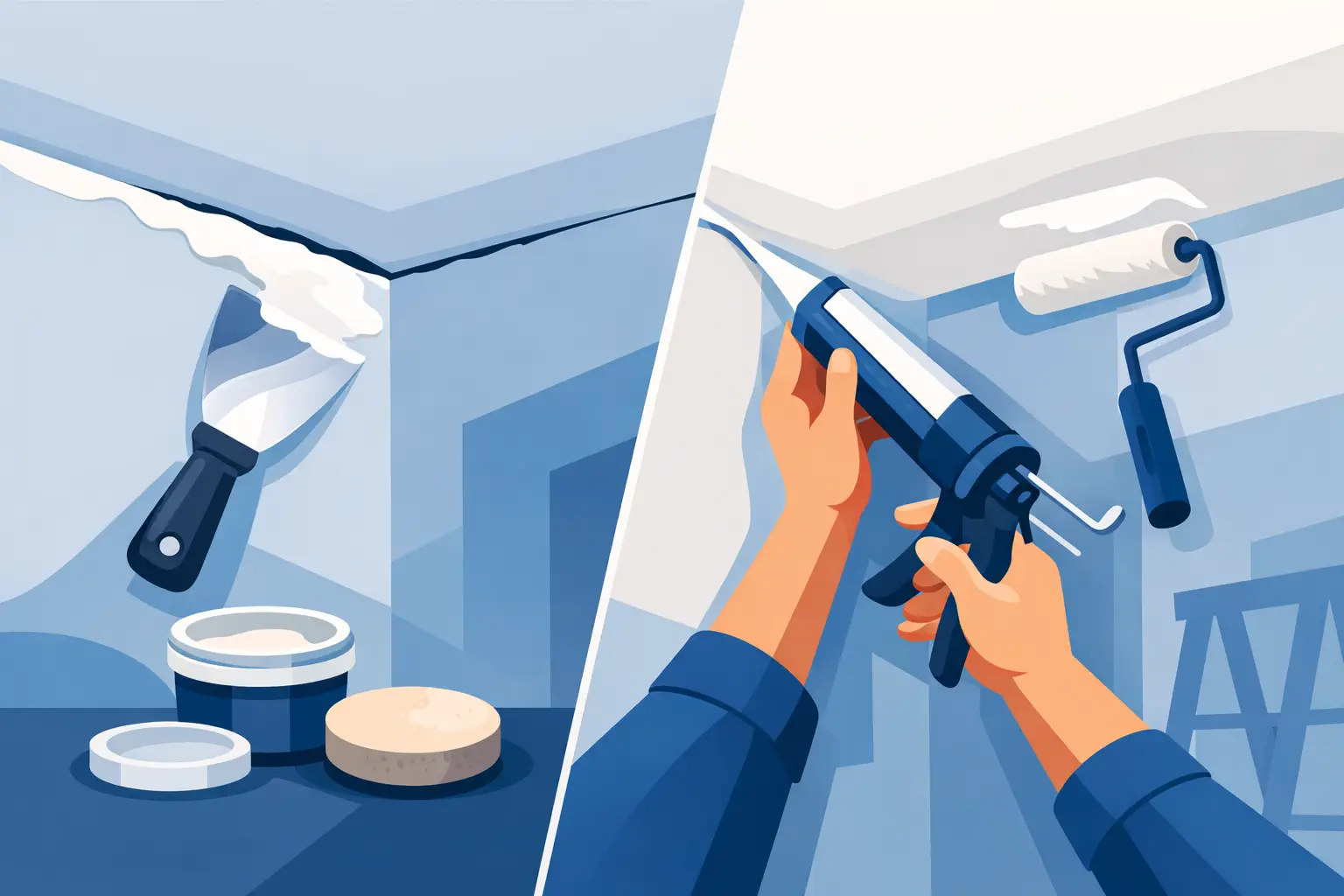
These often come from truss uplift, seasonal movement, or normal framing shift. In colder months especially, wood framing can move enough to open a line at the top of the wall. That does not always mean there is a serious problem, but it does mean the repair should allow for some movement rather than simply burying the line under more mud.
Cracks in older plaster walls
Plaster behaves differently than drywall. In older Monroe and Downriver homes, plaster can crack from age, vibration, house settling, or failure of the plaster keys behind the surface. A plaster crack may look simple on the outside while hiding loose material underneath.
That is why plaster repairs are rarely one-size-fits-all. Some areas can be stabilized and skim coated. Others need more involved repair or replacement to get a solid, lasting finish.
When a crack is minor and when it is not
A thin, stable hairline crack with no staining, sagging, or spreading is often a minor repair. It may still need professional finishing if you want an invisible result, especially on ceilings or textured surfaces, but it is usually manageable.
A crack deserves closer attention when it is wider than a hairline, continues to lengthen, reappears after repair, or comes with related symptoms like nail pops, bowed surfaces, water marks, soft drywall, or doors that no longer close properly. Those details matter more than the crack alone.
This is where homeowners can get tripped up. A small crack can come from a bigger issue, and a larger-looking crack can sometimes be mostly cosmetic. The surface only tells part of the story.
Why some repairs fail
The biggest reason crack repairs fail is simple: the visible line gets fixed, but the cause does not. If there is moisture, movement, loose tape, damaged board, or unstable plaster underneath, the crack will usually return.
The second issue is poor finish work. Lasting drywall and plaster repair takes more than filling a gap. It may require removing failed tape, reinforcing the joint, replacing damaged sections, blending texture, or skim coating a broader area so the finished surface looks clean and uniform.
That matters even more in high-visibility areas like living rooms, kitchens, entryways, and ceilings with natural light. A patch that is technically closed up but still obvious from across the room is not much of a repair.
What a professional looks for first
An experienced drywall or plaster contractor will usually start by identifying the pattern of the crack, checking whether the surface is solid, and looking for signs of moisture or repeated movement. They want to know if the issue is isolated to the finish or tied to something deeper.
That inspection shapes the repair. A simple seam crack may need joint reinforcement and refinishing. Water-damaged drywall may need removal and replacement. Older plaster may need stabilization before any cosmetic work starts. Texture matching may also be necessary so the repaired area does not stand out.
For homeowners, that approach saves time and frustration. For builders and remodelers, it helps avoid callbacks.
Getting a repair that lasts
If you are dealing with recurring cracks, the goal is not just to make them disappear for paint day. The goal is to correct the failed area, address the underlying cause when possible, and leave a finish that blends with the rest of the room.
That is especially important in older homes and in properties that have seen previous patchwork. Clean, durable results come from proper prep, sound materials, and knowing when a crack can be repaired versus when a section should be replaced. At TDM Drywall, that kind of judgment comes from years of seeing what holds up and what does not.
If a crack in your wall or ceiling has changed, spread, stained, or come back more than once, it is worth having it looked at before it turns into a bigger repair. Catching the real cause early usually leads to a cleaner fix, a better finish, and less disruption later.




Leave A Comment