
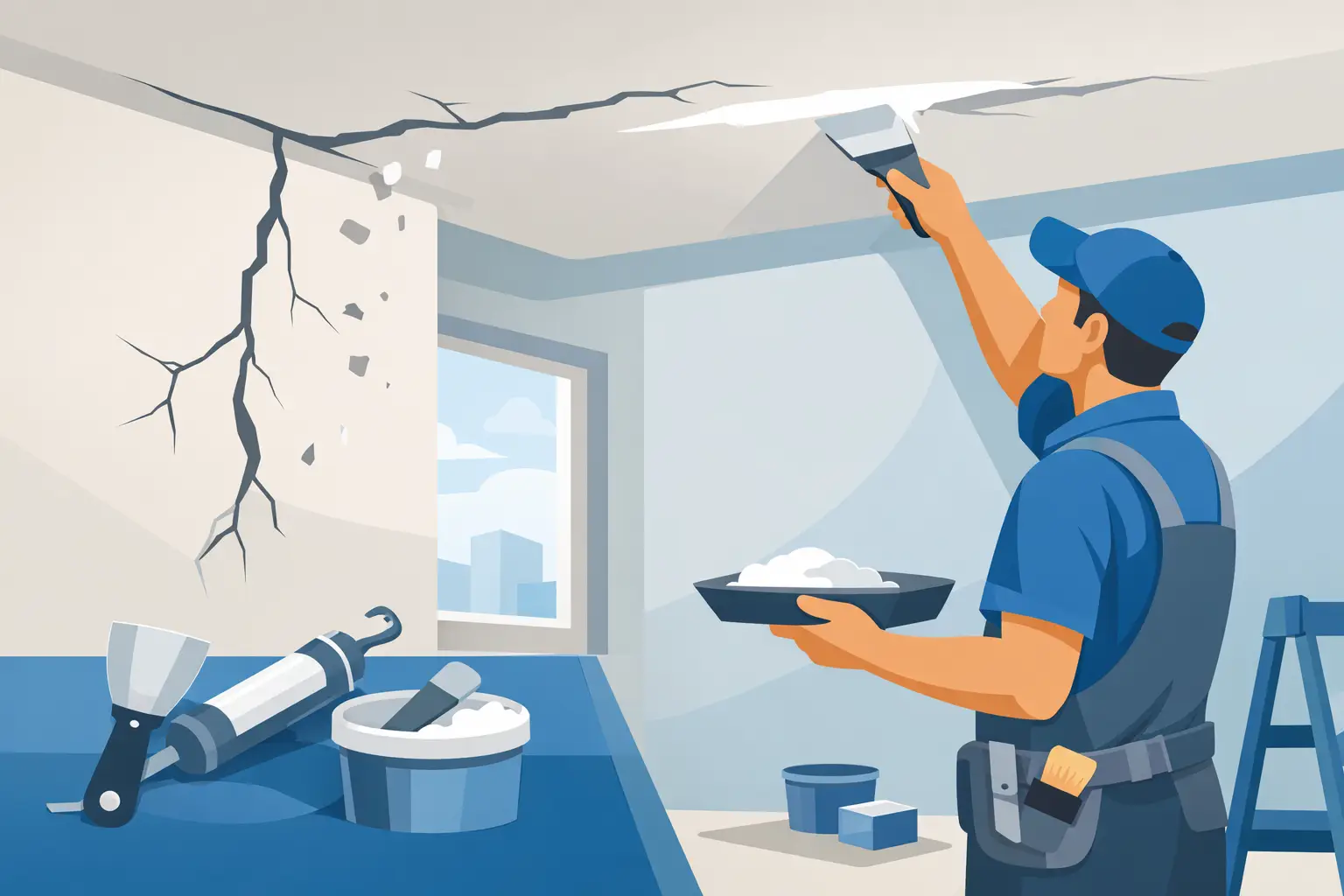
A crack running across the ceiling or creeping up a wall tends to get your attention fast. Sometimes it is cosmetic. Sometimes it points to movement, moisture, poor taping, or an older patch that finally gave out. In either case, wall and ceiling crack repair should be handled the right way if you want a clean finish that actually lasts.
For homeowners, cracks are frustrating because they make a room look neglected even when the rest of the space is in good shape. For builders, remodelers, and property owners, they can turn into callback issues if the repair is rushed or the finish does not blend. The real fix is not just covering the line. It is understanding why the crack formed and matching the repair method to the surface, the location, and the condition of the surrounding drywall or plaster.
What causes wall and ceiling cracks?
Not every crack means the same thing. A thin hairline crack over a doorway is different from a long seam opening across a ceiling. In Southeast Michigan, seasonal movement plays a role. Homes expand and contract as humidity and temperature change, and that movement often shows up first at drywall joints, corners, and older plaster surfaces.
Settling is another common cause. A house does not have to be unsafe to develop minor settlement cracks. Small shifts over time can stress taped joints and leave visible lines. You also see cracking after water damage, especially when a ceiling has sagged slightly or when damp materials were never fully replaced.
Workmanship matters too. If the original tape bond was weak, if the wrong compound was used, or if a previous patch was simply filled and painted without reinforcing the area, the crack usually comes back. That is why some repairs look fine for a few months and then reappear under the same lighting that made them visible the first time.
When a crack is mostly cosmetic – and when it is not
A lot of cracks are surface-level issues, but not all of them should be treated that way. Hairline cracking along a drywall seam, a corner bead edge, or an older plaster joint can often be repaired as a finish problem. The goal there is to stabilize the surface, refinish it properly, and make the repair disappear into the surrounding wall or ceiling.
It becomes more serious when the crack is widening, spreading quickly, staining, sagging, or accompanied by soft drywall. Those signs can point to moisture, structural movement, or material failure. A ceiling crack with discoloration around it deserves more attention than a clean, dry seam crack in a hallway. The same goes for cracks that reopen again and again after multiple patch jobs.
This is where experience matters. A proper assessment can tell the difference between normal movement and a deeper problem that needs to be addressed before any finish work starts.
Why wall and ceiling crack repair often fails
The most common mistake is treating a crack like a simple paint prep issue. Spackle gets pushed into the line, the area gets sanded, then painted. It looks smooth for a short time, but the crack comes back because nothing was done to reinforce the joint or remove loose material.
Another problem is skipping the prep. If the cracked seam is unstable, the damaged tape needs to be cut out or reset. If the ceiling has texture, the repair has to account for that texture from the beginning, not as an afterthought. On older plaster walls, the surrounding area may need a different approach than standard drywall because the base material behaves differently.
Poor blending is another reason repairs stand out. Even if the crack is technically filled, a flat patch in the middle of an orange peel wall or a mismatched ceiling texture will stay visible. Good repair work is not just about stopping the crack. It is about restoring the surface so it looks consistent under normal room lighting.
The right repair depends on the surface
Drywall seams, corner cracks, plaster cracks, and ceiling separation all call for slightly different methods. In many drywall cases, the damaged area needs to be opened enough to remove weak compound, retaped if necessary, and built back with the proper compounds in stages. That gives the repair strength instead of just surface coverage.
Plaster can be more nuanced. In older homes, the visible crack may only be part of the issue. The surrounding plaster may be brittle, detached in spots, or uneven from years of previous repairs. A durable fix may involve stabilizing the area first, then refinishing it carefully so the repair does not telegraph through the paint.
Ceilings deserve extra care because they reflect light differently than walls. A slight hump, a shallow dish, or a poorly sanded edge is much easier to spot overhead. That is why ceiling crack repairs often take more finesse than people expect, especially in living rooms, kitchens, and large open areas.
Texture matching is part of the repair
A crack repair is only as good as the finish around it. Smooth walls need clean feathering and careful sanding. Textured walls and ceilings need a patch that blends with the original pattern. If the texture is not matched well, the eye goes straight to the repair even after fresh paint.
This is especially true with ceiling textures, knockdown finishes, and older surfaces that have been painted multiple times. Matching those areas takes more than product knowledge. It takes a feel for application, pattern density, and how the patched spot will look once primed and painted.
That is one reason professional crack repair saves time in the long run. A repair that is structurally sound but visually obvious still leaves the job half done.
What homeowners and contractors should expect from a proper repair
Good wall and ceiling crack repair starts with a straightforward evaluation. What caused the crack? Is the material dry and stable? Is the tape failing? Is there a water issue? Once that is clear, the repair can be done in a way that fits the actual problem instead of guessing.
From there, the process usually includes removing loose or failed material, reinforcing the joint if needed, applying compound in multiple coats, sanding for a flat transition, and matching the existing finish. In some cases, a small area can be handled cleanly and quickly. In others, especially with water damage or widespread cracking, a larger section may need replacement to get a durable result.
That is not upselling. It is the difference between a patch that lasts and one that becomes another repair call. Experienced drywall and plaster contractors know when a crack can be repaired locally and when the better move is replacing compromised material.
Fast repair matters, but finish quality matters more
Most customers want the same thing. They want the crack gone, the room left clean, and the work completed without dragging on for days. That is reasonable. But speed only helps if the repair holds up and looks right.
A quality-focused contractor balances both. The job should move efficiently, communication should be clear, and the final surface should be ready for paint without obvious ridges, flashing, or texture mismatch. For property owners and trade partners, that reliability matters just as much as the repair itself.
That is where a local, experienced company stands apart. With more than 32 years of hands-on experience, TDM Drywall approaches crack repair the way it should be approached – as finish work that needs to be durable, clean, and nearly invisible when it is done.
Repair now or wait?
If the crack is minor, dry, and not changing, you may be tempted to leave it alone for a while. Sometimes that is fine. But visible cracks rarely improve on their own, and waiting can make the repair broader if movement continues or moisture gets involved.
Ceiling cracks deserve quicker attention because they are harder to ignore and more likely to involve hidden damage. The same goes for cracks near leaks, windows, doors, or high-traffic areas where appearance matters. If the room is about to be painted or remodeled, that is often the best time to address the problem correctly instead of painting over it and hoping for the best.
A good repair should not call attention to itself. It should leave the wall or ceiling looking solid, finished, and ready to live with every day. If a crack has been bothering you every time the light hits it just right, that is usually your sign to get it fixed before it becomes a bigger job.

Leave A Comment