A bathroom can look freshly remodeled and still fail behind the paint if the wrong wallboard is used. The best drywall for bathrooms is not one product for every surface. It is the right material for the amount of moisture that specific wall or ceiling will face, installed and finished correctly so the room stays clean, solid, and durable.
For most bathroom remodeling projects, moisture-resistant drywall is a smart choice on walls and ceilings outside the shower or tub area. But where tile will face direct water, drywall is not the right backing at all. That distinction prevents a lot of expensive repairs later.
Best Drywall for Bathrooms: The Short Answer
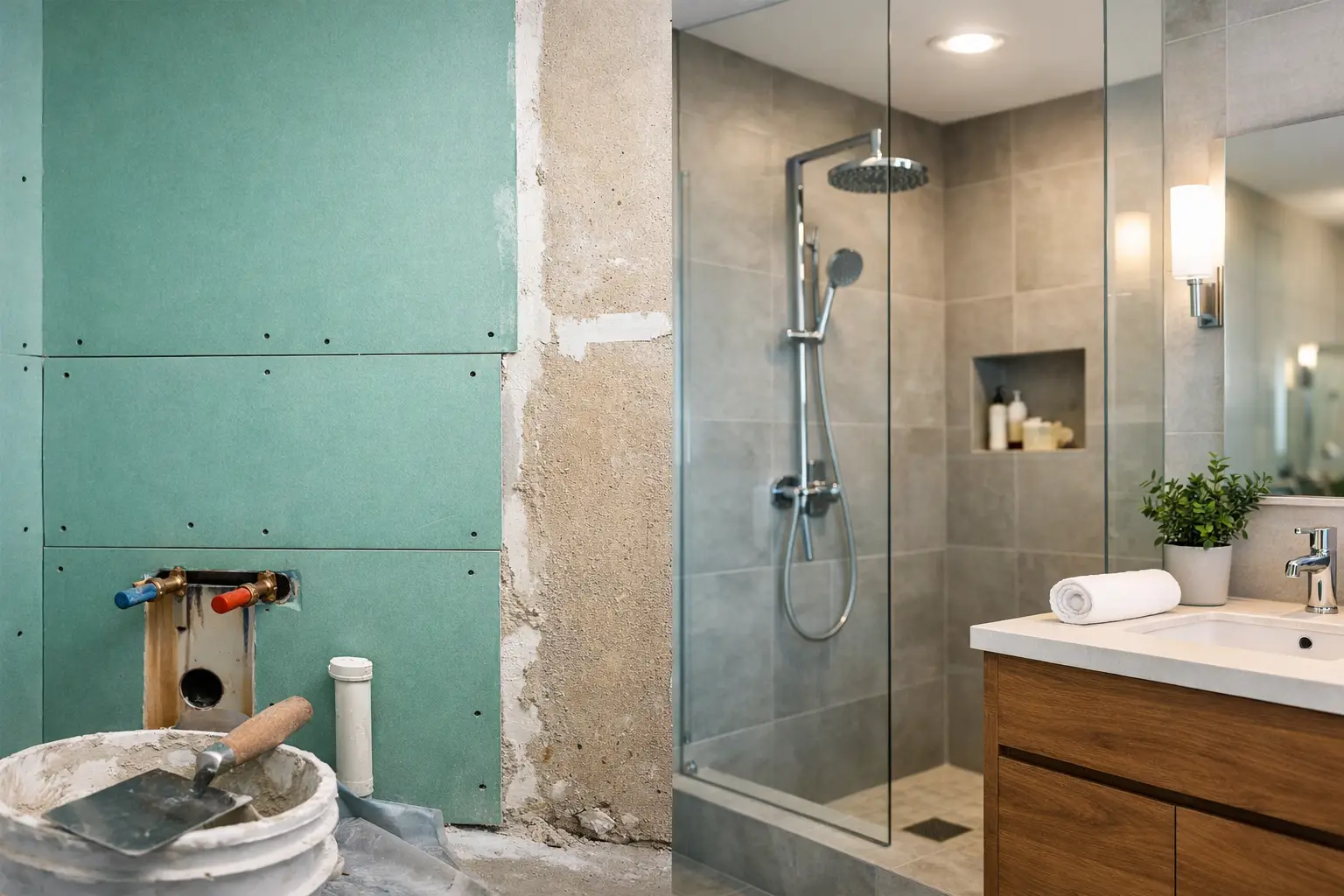
Use moisture-resistant drywall, often called green board or purple board, for general bathroom walls and ceilings that deal with humidity but are not regularly sprayed with water. These panels have a treated gypsum core and moisture-resistant facing that perform better than standard drywall in damp conditions.
For shower surrounds, tub walls with a showerhead, and other wet locations behind tile, use a proper tile backer board instead. Cement board, fiber-cement board, or an approved foam backer system is built for those conditions. You should also pair it with the waterproofing method that specific product and tile installation requires.
You can sometimes use standard drywall on a well-ventilated bathroom ceiling or on walls far from the bathing area. Still, for the modest extra material cost, moisture-resistant drywall is usually the better long-term decision in a bathroom remodel. It provides more protection against everyday steam, occasional splashes, and the moisture that builds up when ventilation is less than perfect.
Start With the Bathroom’s Moisture Zones
Not every wall in a bathroom has the same job. Choosing materials by location helps protect the room without paying for specialty products where they are not needed.
High-moisture areas need more than drywall
The walls inside a shower enclosure are wet areas. So are tub surrounds where water regularly hits the wall. Even moisture-resistant drywall should stay off the wall behind tile in these locations unless a tile system manufacturer specifically allows it, which is uncommon and comes with strict requirements.
Tile grout and caulk are not waterproofing. They are finish materials that need a stable, properly prepared backer behind them. When drywall gets wet repeatedly, its gypsum core can soften, swell, and lose strength. Tile may begin to crack, loosen, or pull away as the wall deteriorates.
Use cement board or another approved tile backer in these areas, then waterproof the assembly the way the system requires. The right wall system matters just as much as the tile on its face.
Humid areas are ideal for moisture-resistant drywall
Bathroom ceilings, vanity walls, toilet areas, and walls near but outside a shower surround are typically good places for moisture-resistant drywall. These surfaces see humidity, but they should not receive direct, repeated water exposure.
This is also where good ventilation matters. No drywall product can make up for a bathroom fan that does not work, has too little capacity, or rarely runs. After a shower, the fan should move moist air outside, not simply into an attic or another part of the home.
Low-exposure walls may allow standard drywall
A powder room without a shower or tub has far less moisture exposure than a full bathroom. Standard drywall is often suitable there, especially when the room gets proper paint and stays in good condition. The same may be true for a wall located well away from a shower in a large, well-ventilated primary bath.
Even then, homeowners often choose moisture-resistant board for consistency and added peace of mind. It is a practical upgrade, especially in Southeast Michigan homes where older ventilation setups and seasonal humidity can add stress to interior surfaces.
Green Board, Purple Board, and Cement Board Compared
The names can be confusing because brands use different colors and product names. The performance category matters more than the color.
Moisture-resistant drywall
Green board and purple board are common names for moisture-resistant gypsum panels. They install and finish much like regular drywall, making them a good fit for painted bathroom walls and ceilings outside wet zones. They are easier to cut and finish than cement board, and they create the smooth surface homeowners expect around vanities, mirrors, lighting, and trim.
Some products also offer improved mold resistance. That is helpful, but do not mistake it for a cure for leaks or poor ventilation. Mold-resistant drywall can resist moisture better than standard board, but a hidden plumbing leak or failed shower waterproofing still needs a repair at the source.
Cement board and other tile backers
Cement board is a dependable option behind tile in shower and tub areas. It does not break down like standard gypsum drywall when exposed to moisture, but it is not automatically waterproof on its own. You must handle seams, fasteners, corners, and the face of the board according to the chosen waterproofing system.
Foam tile backer boards are another option. They are lightweight, easy to cut, and often waterproof when a crew seals their seams and penetrations properly. They can be an excellent system, but correct installation is critical. A quality material cannot compensate for skipped steps around valves, niches, corners, or shower pans.
Regular drywall
Regular drywall remains useful throughout the rest of a home, and it can be appropriate in limited bathroom locations. Its downside is simple: it has less protection against humidity and moisture. In a full bathroom, using it everywhere to save a little upfront can create a preventable repair later.
Installation Details That Make the Difference
The board selection is only half the job. Clean, durable bathroom walls come from careful installation, proper joint treatment, and a finish designed for the room.
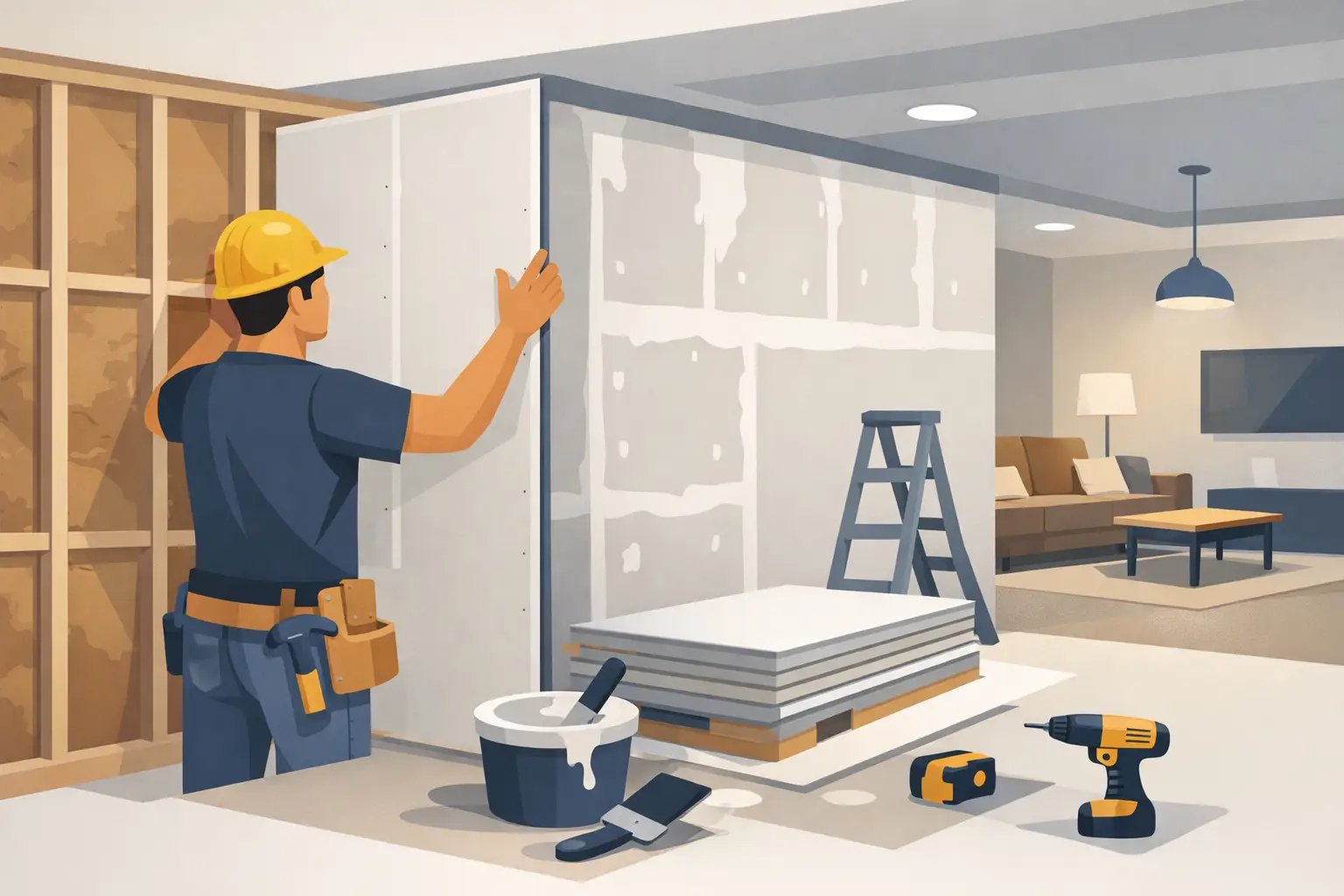
A crew should install moisture-resistant drywall with the correct fasteners and with solid backing at edges, corners, and fixture locations. They should address gaps and damaged paper facing before finishing. Joints need tape and compound applied evenly, then careful sanding so the finished wall stays smooth under bathroom lighting.
For painted bathroom drywall, use a quality primer where needed and a bathroom-rated paint with mildew resistance and a washable finish. Satin or semi-gloss finishes are common because they hold up well to moisture and are easier to clean than flat paint. The best choice depends on the look of the room and the condition of the walls.
Ceilings deserve the same attention. A bathroom ceiling is often the first surface to show peeling paint, stains, or mildew when warm air gets trapped after showers. If an existing ceiling has water staining, do not just paint over it. Confirm whether the cause is condensation, a roof issue, a plumbing leak, or water from the room above before repairing the drywall.
When Bathroom Drywall Should Be Repaired or Replaced
A crew can often repair small nail pops, minor dents, and surface cracks without replacing a whole wall. A skilled drywall contractor can blend the patch, match surrounding texture, and leave a clean surface ready for paint.
Drywall replacement is usually the better answer when drywall has become soft, swollen, crumbly, moldy, or repeatedly wet. Water-damaged board may look dry on the surface while holding damage behind a vanity, around a toilet supply line, or near the edge of a tub. Replacing compromised material is not overdoing it. It gives the repaired area a sound base and makes it possible to inspect the framing and correct the source of moisture.
In older homes, bathroom remodeling can also uncover plaster cracks, uneven walls, and layers of previous repairs. Sometimes a targeted repair and skim coat will create the right finished surface. Other times, removing damaged material and installing new board provides a cleaner, longer-lasting result.
Choose the Material for the Job, Not the Label
The right bathroom wall system is straightforward: use moisture-resistant drywall where humidity is the concern, and use a waterproof tile backer system where direct water is the concern. Then protect both with good ventilation, correct finishing, and prompt repairs when a leak appears.
For a bathroom that feels finished for years instead of months, the material choice should be matched by workmanship. Our drywall installation services bring more than 32 years of hands-on experience to drywall replacement, repairs, and seamless finishing throughout Monroe and the Downriver area, helping homeowners make practical choices before moisture turns a small issue into a larger repair.