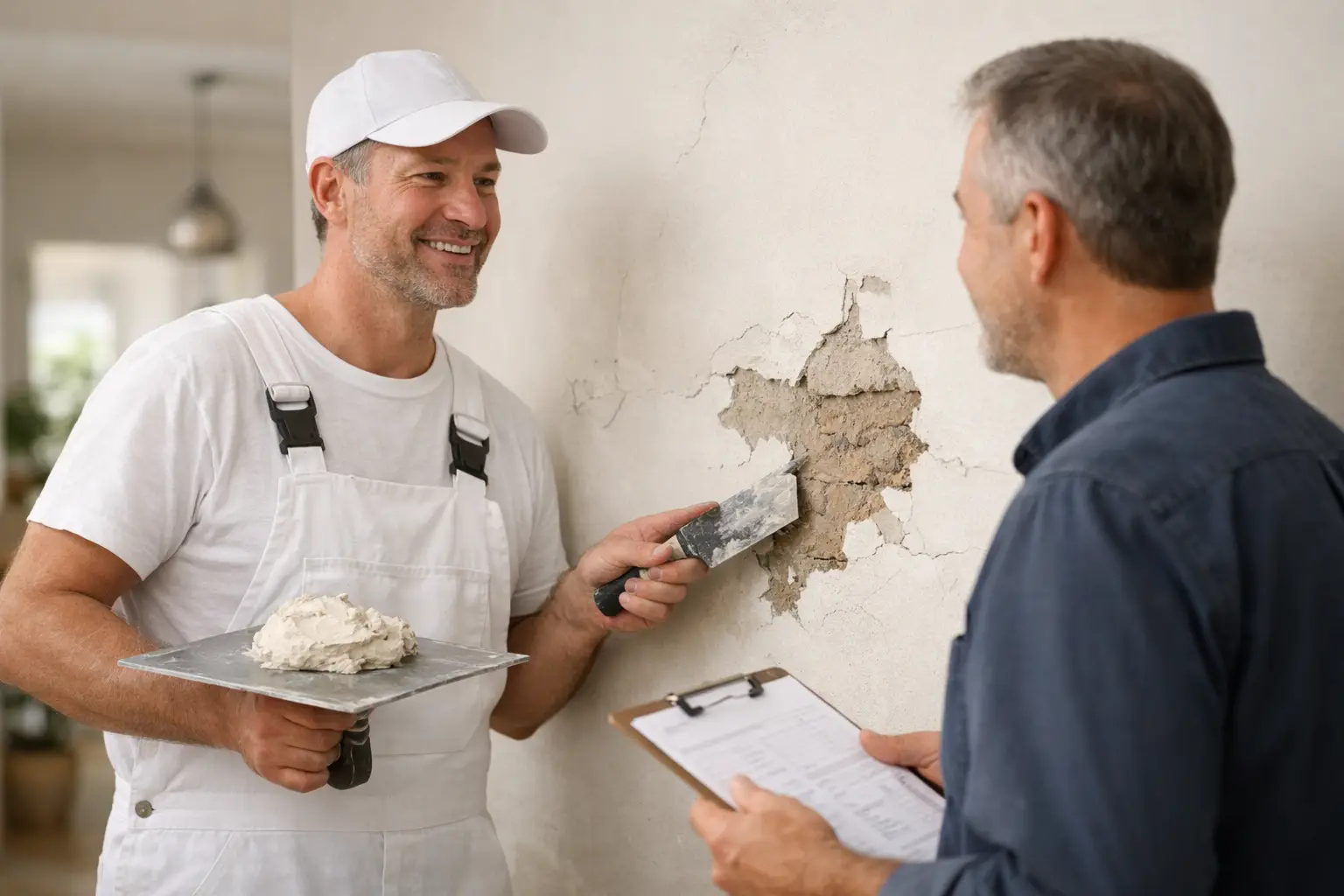

A small crack beside a doorway can raise a bigger question than most homeowners expect: what is behind the paint? When comparing plaster vs drywall walls, the right answer depends on your home’s age, the condition of the surface, the scope of the project, and how closely a repair needs to match the surrounding finish.
Many Monroe and Southeast Michigan homes have plaster walls, especially those built before the mid-20th century. Newer homes and most modern additions use drywall. Both can create smooth, durable interior surfaces, but they are built differently, repaired differently, and better suited to different situations.
Plaster vs Drywall Walls: The Core Difference
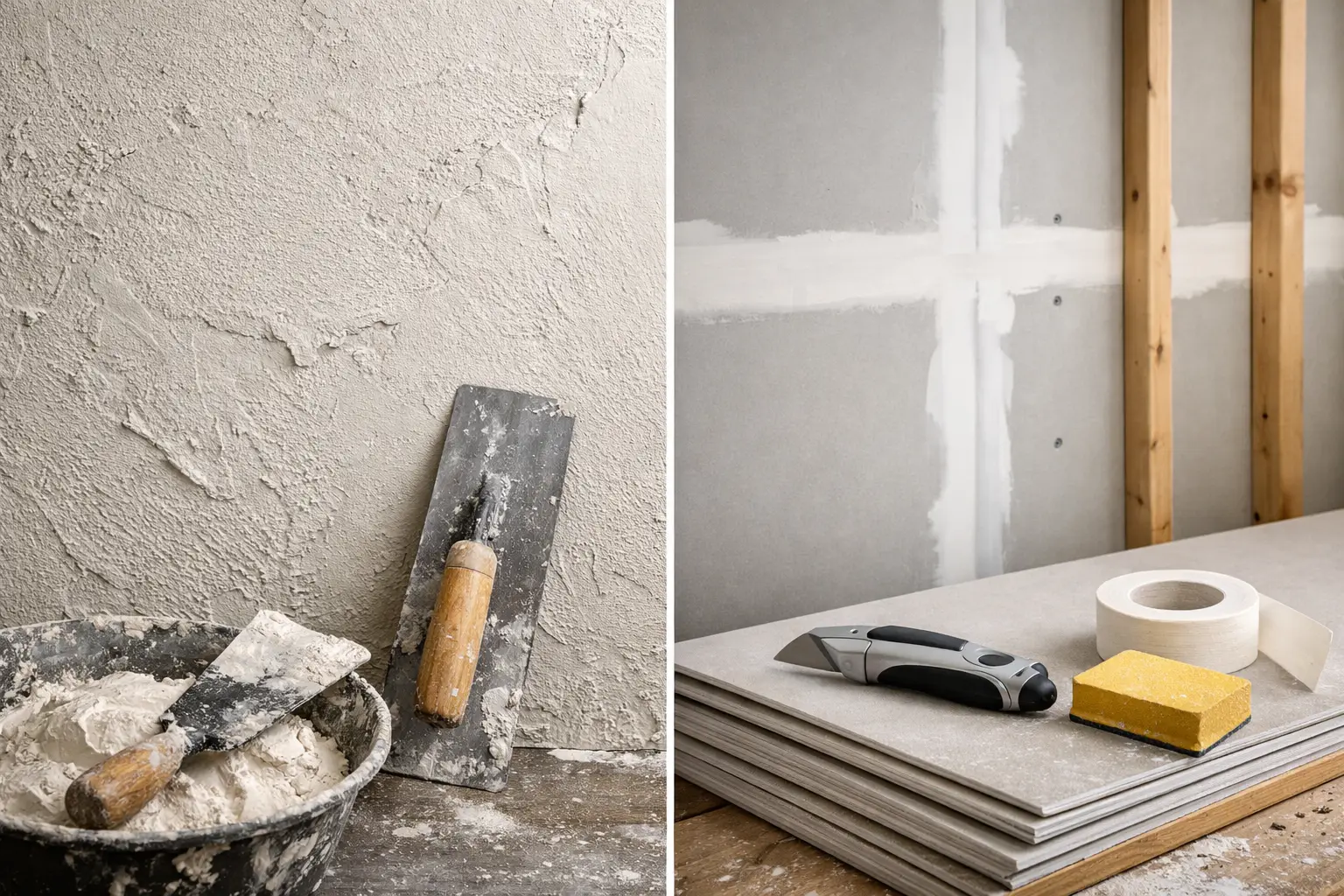
Traditional plaster walls come from applying wet plaster in layers over wood lath, metal lath, or masonry. Once cured, plaster becomes a hard, dense surface. Older plaster work often has a solid feel, subtle character, and strong sound-dampening qualities that homeowners appreciate.
Drywall is made from gypsum pressed between sheets of heavy paper. A crew installs it in large panels, secures it to framing, then finishes it with joint tape and compound. A skilled finisher blends the seams, corners, fasteners, and repairs so the wall reads as one continuous surface after painting.
Neither material is automatically better. Plaster is often worth preserving when it is stable and historically appropriate for the home. Drywall is typically the practical choice for new construction, remodeling, large replacements, and many water-damage repairs.
When Plaster Makes Sense
Plaster can be an excellent wall system when it is in good condition. It is hard, substantial, and resistant to everyday dents. Its density can also help reduce sound transfer between rooms more effectively than a standard drywall installation without added insulation.
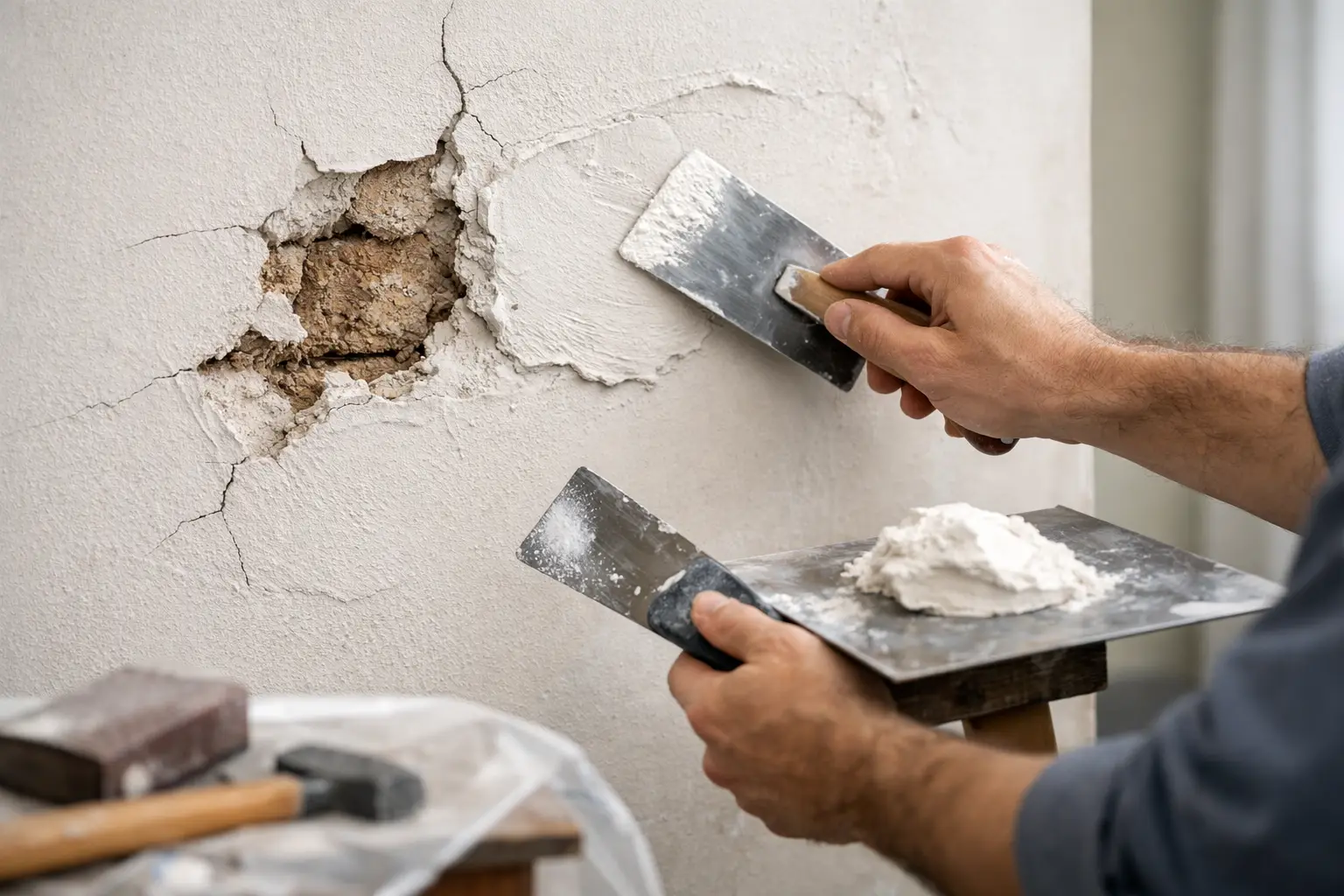
In an older home, keeping original plaster may preserve the look and character of the space. Plaster surfaces can have gently rounded corners, distinctive textures, and details that do not always match modern drywall construction. If damage is limited to a few cracks, small holes, or isolated loose areas, a targeted plaster repair may be the best way to retain that character.
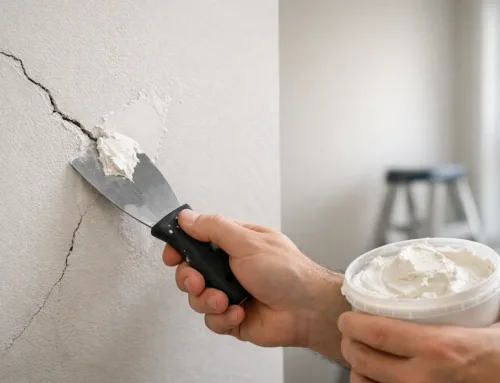
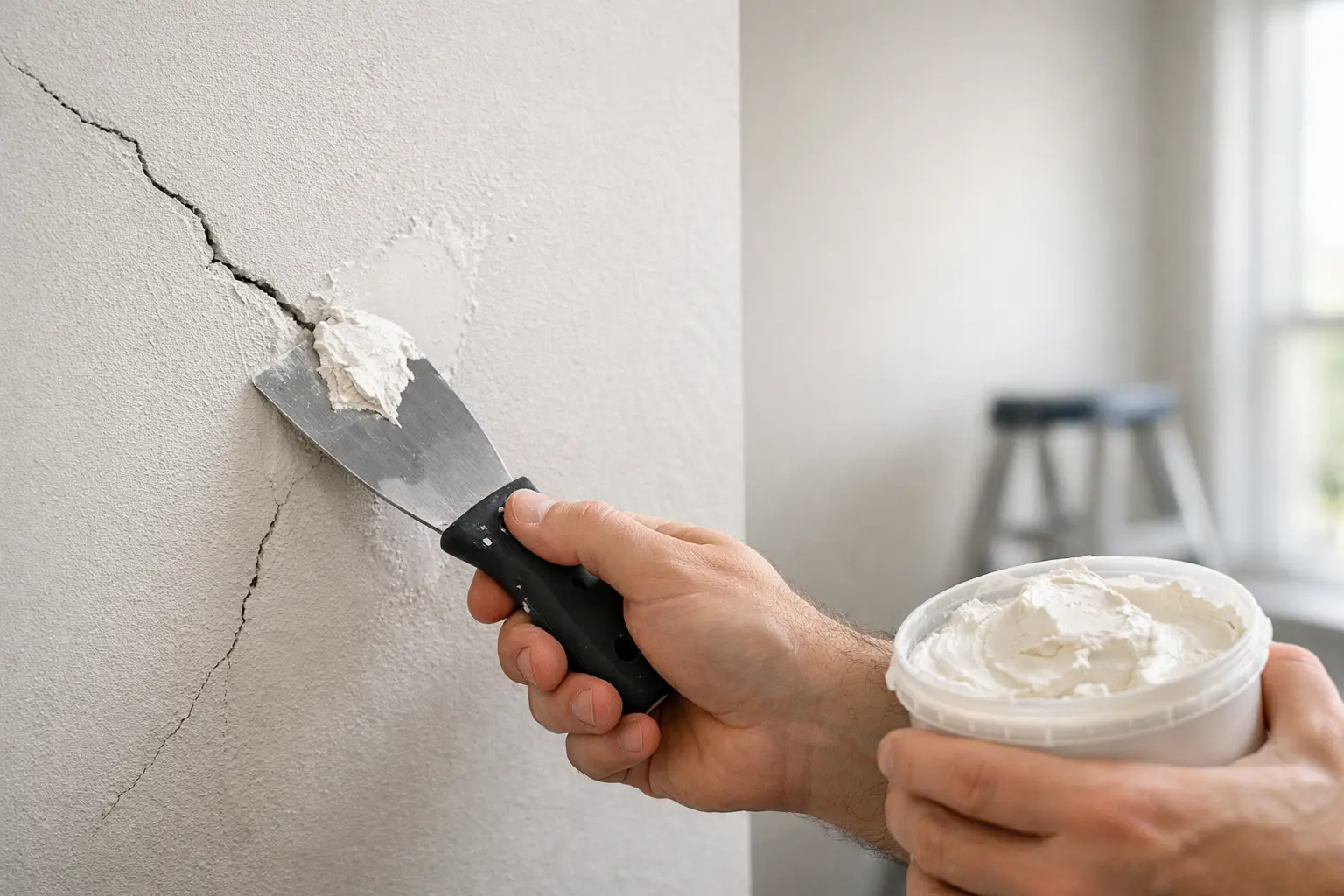
That said, plaster is not maintenance-free. As homes settle, plaster may develop hairline cracks. More serious cracking, bulging, or sections pulling away from the lath can signal a larger issue. Water intrusion can also weaken plaster and damage the lath behind it. Simply filling a crack without addressing movement, loose material, or moisture may only create a temporary cosmetic fix.
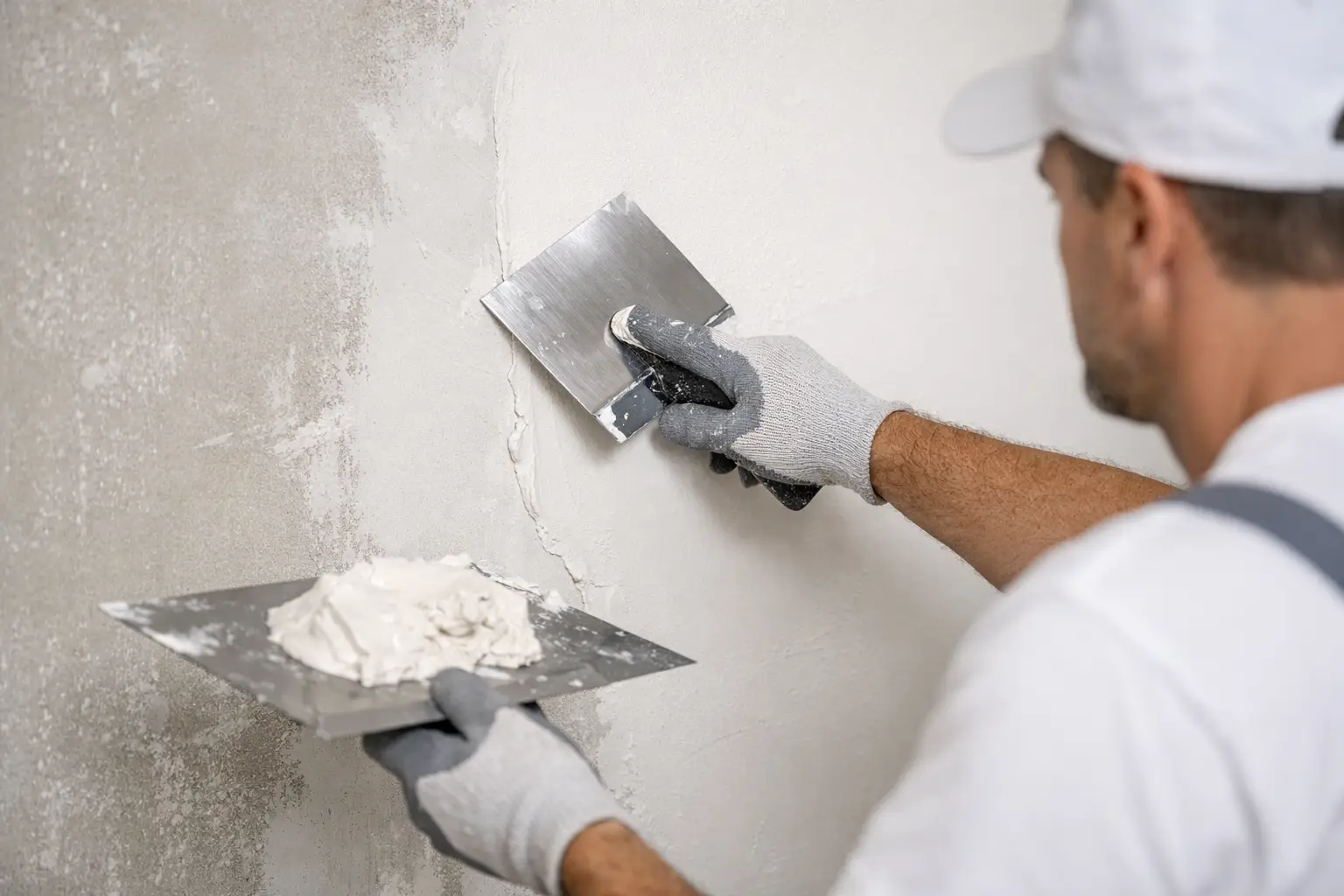
Plaster repair requires patience and surface preparation. The repair has to bond securely, feather into the existing wall, and match the surrounding texture. On a visible wall or ceiling, the finish work matters as much as the patch itself.
When Drywall Is the Better Choice
Drywall is the standard for modern interiors because it is efficient, versatile, and easier to modify during remodeling. It works well for basement finishing, room additions, kitchen and bathroom updates, commercial tenant improvements, and full wall or ceiling replacement.
When a plaster wall has widespread cracking, extensive water damage, missing sections, or recurring movement, replacing damaged areas with drywall can be more reliable than repeatedly patching a failing surface. Drywall also gives contractors a clean plane for correcting framing issues, adding insulation, rerouting electrical work, or opening a wall for plumbing repairs.
A crew can finish a drywall surface completely smooth or match it to an existing orange peel, knockdown, hand texture, or ceiling texture. The material itself is only part of the result. Clean seams, flat surfaces, crisp corners, and careful texture blending are what make the repair disappear after paint.
Drywall is easier to cut and replace than plaster, but it is also softer. It can dent from furniture impacts or active households. Fortunately, small holes, dents, and cracks are usually straightforward to repair when the surrounding wall is sound.
Durability, Sound, and Everyday Performance
Plaster generally wins on hardness. Its dense, cement-like finish stands up well to minor impacts and often feels more solid when tapped. Drywall is more vulnerable to dents, particularly in hallways, stairwells, garages, and busy commercial spaces.
However, durability is not just about surface hardness. A wall system must also handle the building’s movement, moisture conditions, and intended use. Plaster can crack when framing shifts, while drywall joints can crack if a home settles or framing moves. Neither material solves an underlying structural or moisture problem.
For sound control, plaster has an advantage because of its mass. But drywall assemblies can perform very well when a crew builds them with the right insulation, resilient channels, sound-rated panels, or multiple layers. For a basement office, bedroom, or commercial space, the wall assembly matters more than choosing drywall alone.
Cost and Project Timing
Drywall usually costs less for large-scale installation or replacement because panels cover substantial wall area quickly and the process is familiar to most remodeling trades. It is also easier to schedule around electrical, insulation, and framing work during a renovation.
Plaster repairs can be more labor-intensive, especially when matching an older texture or stabilizing damaged material. Small plaster repairs are not necessarily inexpensive simply because the damaged area is small. Protecting the surrounding finish and making a patch blend naturally requires skilled preparation and finishing.
Drying time also affects the schedule. Joint compound and plaster both require drying between coats, but the number of coats, humidity, ventilation, and finish requirements can change the timeline. A fast repair should never mean rushing the steps that prevent flashing, visible seams, or texture mismatch after painting.
For homeowners, the practical question is often not, “Which is cheaper?” It is, “What repair will look right and hold up?” A low-cost patch that remains visible or cracks again can cost more in frustration than a proper repair completed the first time.
Repair or Replace? Look at the Damage Pattern
A few isolated cracks do not automatically mean a plaster wall needs to come down. Fine, stable cracks can often be repaired. Likewise, a small hole in drywall rarely requires replacing an entire wall.
Replacement becomes more reasonable when damage is widespread, when large sections are loose, or when water has compromised the wall material. Soft drywall, staining, mold concerns, crumbling plaster, rusted metal lath, and sagging ceilings all call for a closer inspection before cosmetic work begins.
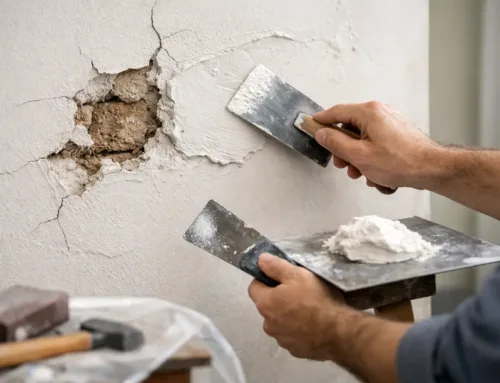
Water damage deserves particular attention. You must correct the source of the leak before any wall or ceiling repair. Once the area is dry and stable, a crew can often remove and replace damaged drywall cleanly. A crew can often repair plaster if the damage is limited, but loose or deteriorated sections need removal back to sound material.
Matching the Finish Is Where Craftsmanship Shows
The most visible part of either plaster or drywall repair is the final finish. A wall can look structurally sound and still look unfinished if the patch has a different texture, sheen, or edge profile than the rest of the room.
This is especially true with ceilings. Popcorn textures, knockdown finishes, swirl patterns, and older hand-applied plaster textures are difficult to blend without experience. Lighting from windows and recessed fixtures can expose even small ridges, sanding scratches, and uneven patches.
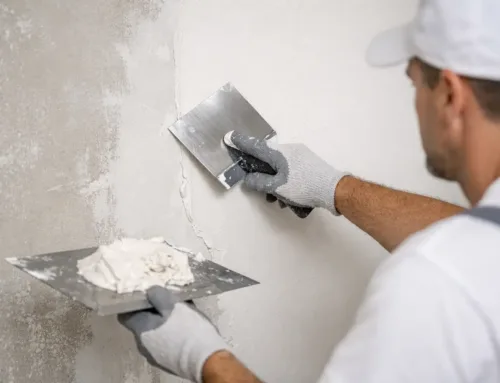
Professional finishing involves more than applying compound. It means controlling coat thickness, feathering wide enough to hide transitions, sanding cleanly, and matching the texture before paint. When needed, skim coating can level tired, uneven, or heavily patched walls and provide a fresh surface for painting.
Choosing the Right Material for Your Home
Choose plaster repair when the existing plaster is mostly sound, the home’s original finish is worth preserving, and damage is limited enough to stabilize and blend properly. Choose drywall for new walls, major remodels, broad replacement areas, and situations where damaged plaster no longer provides a dependable base.
There are also hybrid solutions. A contractor may repair sound plaster in one area while replacing severely damaged sections with drywall. With proper preparation and finishing, a crew can make the transition look consistent across the room.
The best decision starts with an honest look at the wall, ceiling, and cause of the damage. A family-owned contractor like TDM Drywall can evaluate whether a careful repair, a skim coat, or a full replacement will provide the clean, durable result your space needs.
Before covering a crack or repainting a stained ceiling, take a moment to ask what caused it and what finish will truly last. That extra step is often what separates a quick patch from a wall that looks right for years.