

A finished basement can add a family room, office, bedroom, or much-needed storage space, but the wall material has to handle a tougher environment than the rest of the house. The best basement drywall options are not always the same boards used upstairs. In Southeast Michigan, seasonal humidity, cold foundation walls, and the possibility of minor water intrusion all affect which material will give you a clean, durable finish.
Drywall is still an excellent choice for most finished basements. The key is selecting the right type, addressing moisture before you close the walls, and installing it with the correct details. A paint-ready basement should look good on day one and still be holding up years later.
Best Basement Drywall Options: Start With the Space
Before choosing a panel, look at the basement itself. Is it completely dry year-round? Has it ever had a seepage issue, a plumbing leak, or condensation on foundation walls? Will the area include a bathroom, laundry room, wet bar, or another space that sees regular moisture?
A dry, properly insulated basement has more options than a basement with an unfinished moisture problem. No drywall product can correct water entering through a foundation crack, poor exterior drainage, or a failed sump system. Fix those issues first. Covering them with new board may make the room look finished temporarily, but it can trap moisture where nobody can see it and where repairs run expensive.
Once the basement is dry and the framing plan is sound, the right board comes down to location, budget, and the level of moisture resistance needed.
Standard Drywall for Dry Finished Areas
Standard paper-faced drywall remains a practical choice for large basement living areas that stay dry. It is affordable, readily available, and provides the smooth finish homeowners expect for painted walls and ceilings. Over properly framed, insulated walls with good humidity control, standard drywall performs very well.
The trade-off is its paper facing. If the board gets wet from a leak or persistent humidity, the paper can support mold growth and the gypsum core can soften. Standard drywall suits a confirmed dry space, not a basement with an unresolved water history.
For a finished recreation room or home office in a dry Monroe or Downriver basement, standard drywall may be the sensible value choice. It should still sit slightly above the concrete floor rather than tight against it. That small gap keeps the board from wicking up moisture if the floor gets damp.
Moisture-Resistant Drywall for Most Basements
Moisture-resistant drywall is often the best all-around choice for basement walls. Its colored facing usually gives it away. The board carries a treated paper surface and core that resist moisture better than standard drywall. It costs more, but the added protection usually earns its keep in below-grade spaces where humidity can fluctuate.
This material is a strong fit for finished basement family rooms, hallways, utility-adjacent walls, and areas near a laundry room. It is not waterproof, and it will not solve an active leak. Think of it as an extra layer of protection in a basement you have already prepared and maintained properly.
For many homeowners, moisture-resistant drywall offers the right balance. It finishes much like regular drywall, works with standard joint compound and paint systems, and gives the project a better margin of safety than basic board.
Mold-Resistant, Fiberglass-Faced Drywall
Fiberglass-faced drywall, which some call paperless drywall, is a higher-performing option for basements where humidity has been a concern. Instead of a paper facing, it uses a fiberglass mat that does not provide the same food source for mold. The gypsum core also resists moisture and mold better.
This board can be a smart choice for basement exterior walls, rooms near mechanical equipment, and properties that once ran damp but no longer do. It earns its place when an owner wants more protection without moving to cement board throughout the entire basement.
The trade-off is cost and finishing technique. Fiberglass-faced products can require more care to achieve a smooth, paint-ready surface, especially around seams and fasteners. An experienced drywall contractor can make a major difference here. Proper taping, coating, sanding, and texture matching are what separate a durable wall from one that shows every joint after the paint dries.
Cement Board for Wet Areas Only
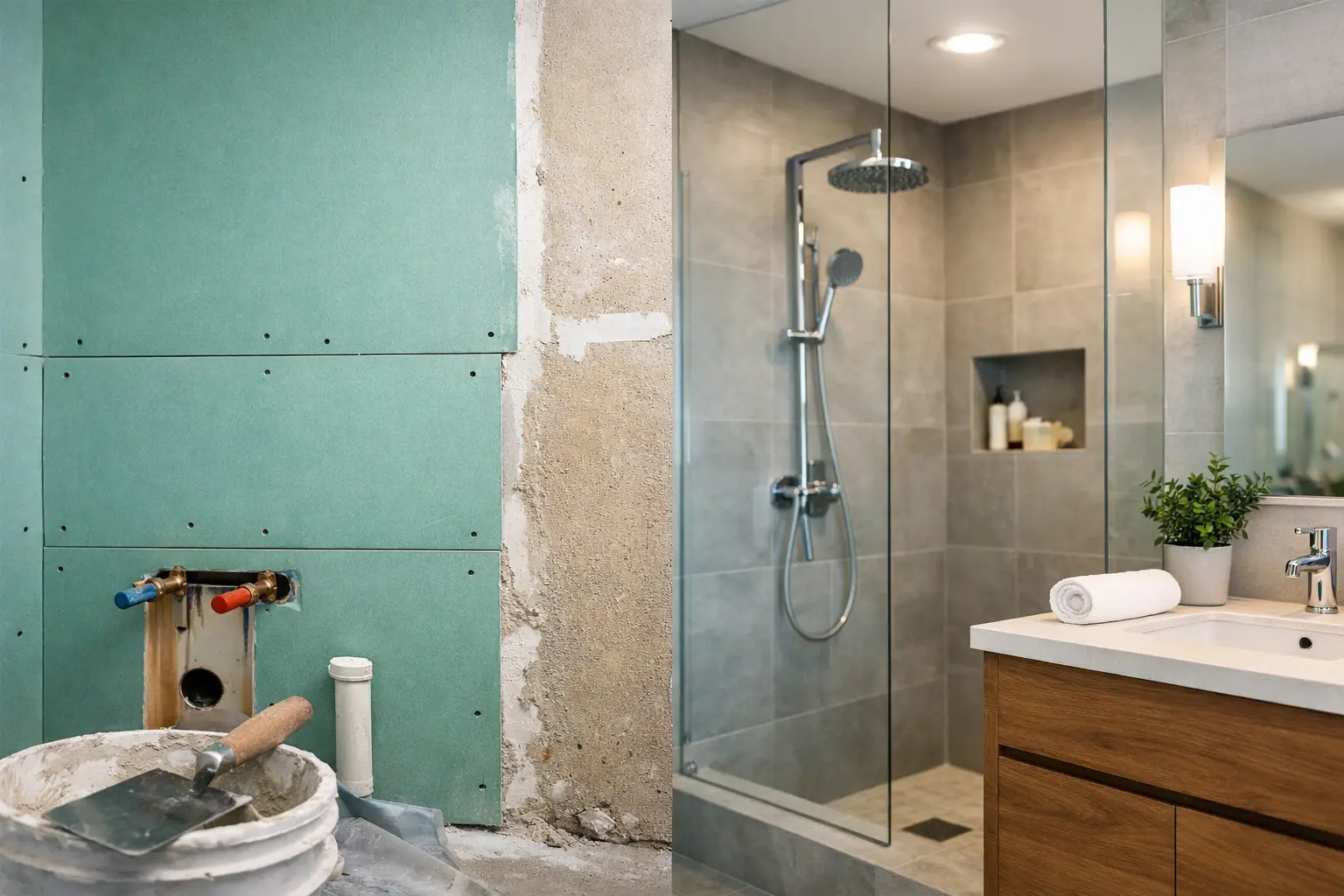
Cement board is highly moisture-resistant, but it is not the best choice for every basement wall. It is heavy, harder to cut, and more labor-intensive to install and finish than drywall. It generally works best behind tile in a basement shower, around a tub, or in another direct-splash area.
For example, a basement bathroom may use cement board in the shower enclosure and moisture-resistant drywall on the remaining bathroom walls and ceiling. That approach puts the most durable material exactly where it counts without adding unnecessary cost and labor to the entire room.
Cement board also is not automatically waterproof. A tiled shower assembly needs proper waterproofing details at seams, corners, penetrations, and transitions. The board itself is only one part of the system.
The Installation Details Matter as Much as the Board
Even the best board fails against a damp foundation or too close to a concrete slab. Basement finishing requires a plan for moisture, insulation, framing, and air movement before the drywall crew starts hanging panels.
Evaluate foundation walls for cracks, staining, efflorescence, or signs of ongoing water entry. Select and install insulation to match the wall assembly, local conditions, and applicable building requirements. Separate wood framing from concrete with the appropriate materials, and keep the finished wall from creating a hidden cavity where moisture can collect.
Keep drywall panels off the floor by roughly a half inch. The baseboard covers the gap, while the separation helps protect the panel edge from minor moisture exposure. In a basement with a concrete ceiling or exposed floor system above, sound control may also influence the drywall plan. Thicker board, insulation, or a second layer of drywall can reduce noise between floors, but each option adds cost and deserves an early decision.
Ceilings deserve their own decision. Standard drywall is often suitable for a dry basement ceiling, while moisture-resistant board may make sense near bathrooms, laundry areas, or plumbing. If future access to pipes, valves, and wiring is a priority, a drop ceiling or access panels may be more practical than permanently covering everything with drywall.
How to Choose the Right Option for Your Project
In a dry basement living space, standard drywall delivers an attractive, cost-effective finish. Most finished basements do better with moisture-resistant drywall, which adds protection while keeping a familiar painted appearance. On exterior walls or anywhere humidity runs higher, consider fiberglass-faced mold-resistant drywall. Cement board belongs in direct-wet locations, especially behind tile.
A few questions can help narrow the decision:
- Has the basement ever had seepage, flooding, plumbing leaks, or visible condensation?
- Will the room include a shower, laundry equipment, or other regular moisture sources?
- Does the foundation wall have proper insulation and framing before the drywall goes up?
- Do you want the lowest initial cost, or more protection against a future repair?
If there is any uncertainty about the basement’s moisture condition, solve that question before selecting finish materials. It is far less expensive to correct drainage, leaks, or humidity issues before new walls and ceilings are in place.
A Finish That Looks Right and Holds Up
Basement drywall is not just about hanging sheets. Clean seams, straight corners, proper fastener placement, and a consistent final texture all matter once paint and lighting expose the finished surface. Repairs are especially challenging when new drywall has to blend into an existing ceiling or wall texture.
With more than 32 years of hands-on experience, TDM Drywall helps homeowners, builders, and property managers make practical drywall decisions and delivers clean, seamless results that last. Whether the project involves one damaged basement wall or a full lower-level remodel, professional installation helps protect the investment and keeps the finish looking intentional.
A basement should feel like part of the home, not like a finished room waiting for its first moisture problem. Choose the board for the conditions, prepare the space carefully, and give the final finish the attention it deserves.
Planning a basement build-out? Our drywall installation services cover hanging, taping, and finishing to a smooth surface ready for primer, for basements throughout Monroe and the Downriver area.